Big About
Content Designer, UX Writer, Copywriter with 14+ years of experience, from global consumer products to fintech to the world's largest professional network. My specialties include UX research, complex ecosystems, storytelling, and (hold your hats!) unabashed enthusiasm, making the work both fun and fruitful.
I’m a believer in both the power of AI and in building human-centered products. I think about AI as a way to compound intelligence: things tend to be better when you have multiple types of intelligence working in collaboration. We’re really only at the beginning of the “AI story,” so it’s hard to predict where product building will go. More than anything, I think it’s important to always come back to the user experience and ask: what is it that we, as human beings, need to do in the world and how do these technologies help us do that? Words, written or verbal exchange, aren’t going anywhere, and most likely will become even more prominent in UX. No matter what technological revolution is happening, content design should anchor on stronger, better, more meaningful UX.
Highlights from 5 years at LinkedIn: I led content design across Search, Jobs, and Feed, and launched company-wide moments like the first "Year in Review" experience. I helped develop and execute on new features, including semantic search, job collections, and job match. I co-led a vision project that steered the product roadmap toward agentic development, a focus on daily active users, video, topical Feed, and a more interconnected ecosystem. As a core pioneer of the design-led research program, I accelerated user testing, stakeholder alignment, and decision-making. I initiated LinkedIn's first wave of Generative AI content guidelines and developed a workshop kit called “Characters are Forever” to focus teams on human-centered design.
Before LinkedIn, I spent the 2010s in a freelance heyday, working with teams at Netflix, Google (via R/GA and Beyond), Audible (via I&CO), Godfrey Dadich Partners, and fintech startup Swell Investing. These assignments spanned from global payment flows to Google’s expansive empire of products to a healthtech app to B2B marketing sites to giving people guided access to ethical equities. Across all of it, I’ve reveled in working collaboratively with talented people, thinking through tough problems, embracing new technologies, and building products and experiences that resonate.
work samples
linkedin’s first “year in REview”
THE SITUATION: True, Spotify Wrapped-like experiences were catching like a fever, and LinkedIn was not immune.
CHALLENGES: Unlike Spotify, LinkedIn is not a purely consumable content surface. Our member data ranges from sensitive areas like job applications to potentially emotional landmines like recalling early connections who may or may not still be friendlies or even still with us. How to navigate these treacherous waters to create an experience that could still rise to the occasion of giving members a positive lookback on their 2025?
ALSO: The exec team loved the singular prototype handcrafted for the CEO. Ok, off to a good start. But, how to take a highly personalized prototype and transform it into a scalable product experience?
ALSO ALSO: You have 5, mayyybeee 6 weeks. GO!
A CRACK TEAM OF LASER-FOCUSED, CROSS-FUNCTIONAL BADDIES: It was an instant love story of fiery-eyed individuals from Editorial, Content Design, Product Management, Creative Systems, Product Design, Product Marketing & Brand, Engineering, Data Science, and Design Program Management. Plus! A close collaboration on visuals and motion with outside agency all star BUCK.
LIKE A STARTUP WITHIN LINKEDIN: One of things that made this project so special was that each member of the team not only got to wield their superpowers but bring all their skillsets, crossing over into other disciplines.
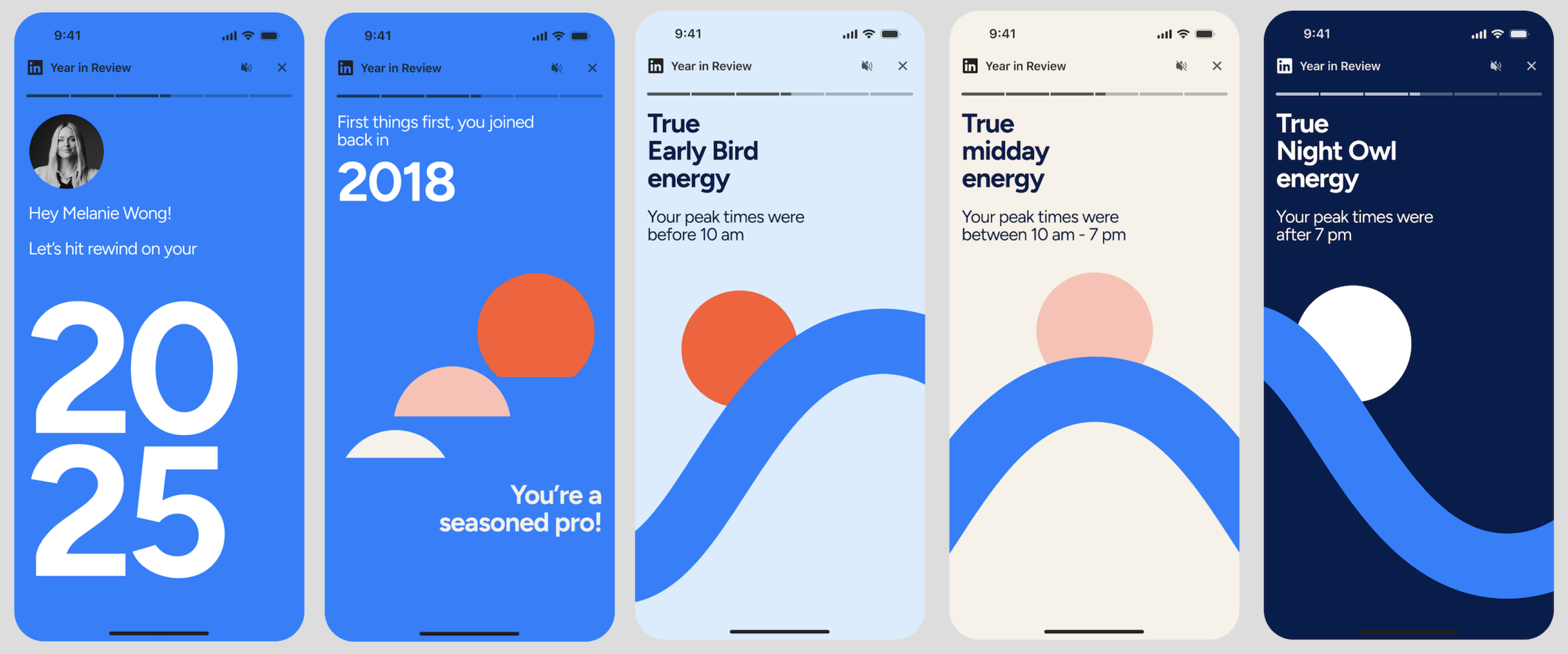
MY ROLE: I led the cross-functional content team to develop all the written content and flow order, translating data into a consumer experience. I established the storyboard framework the wider team used throughout and became the de-facto medium through which we shared progress with stakeholders, execs, and our outside agency partners at BUCK. I drummed up the early competitive audit and ran the post-mortem workshop.
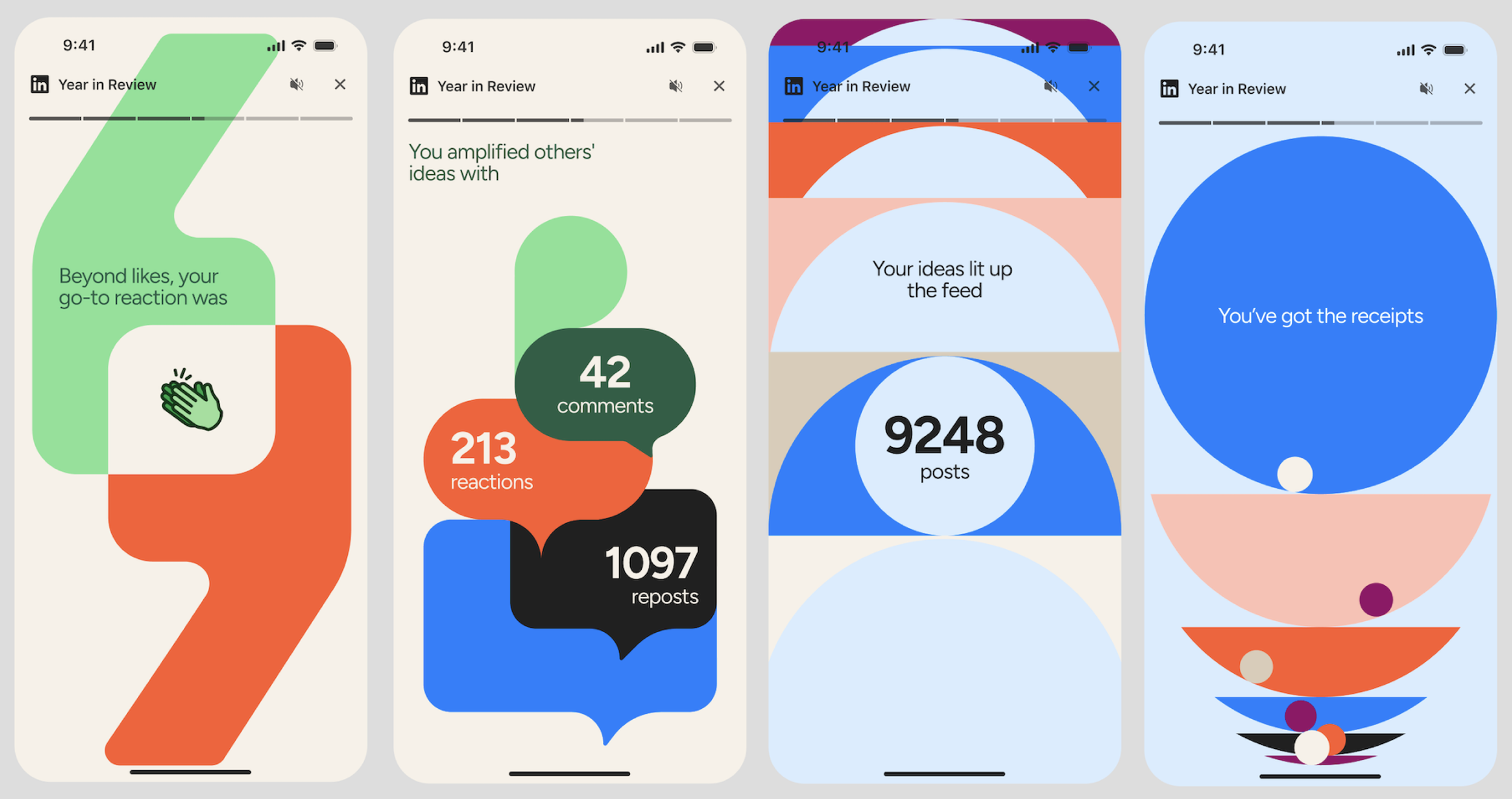
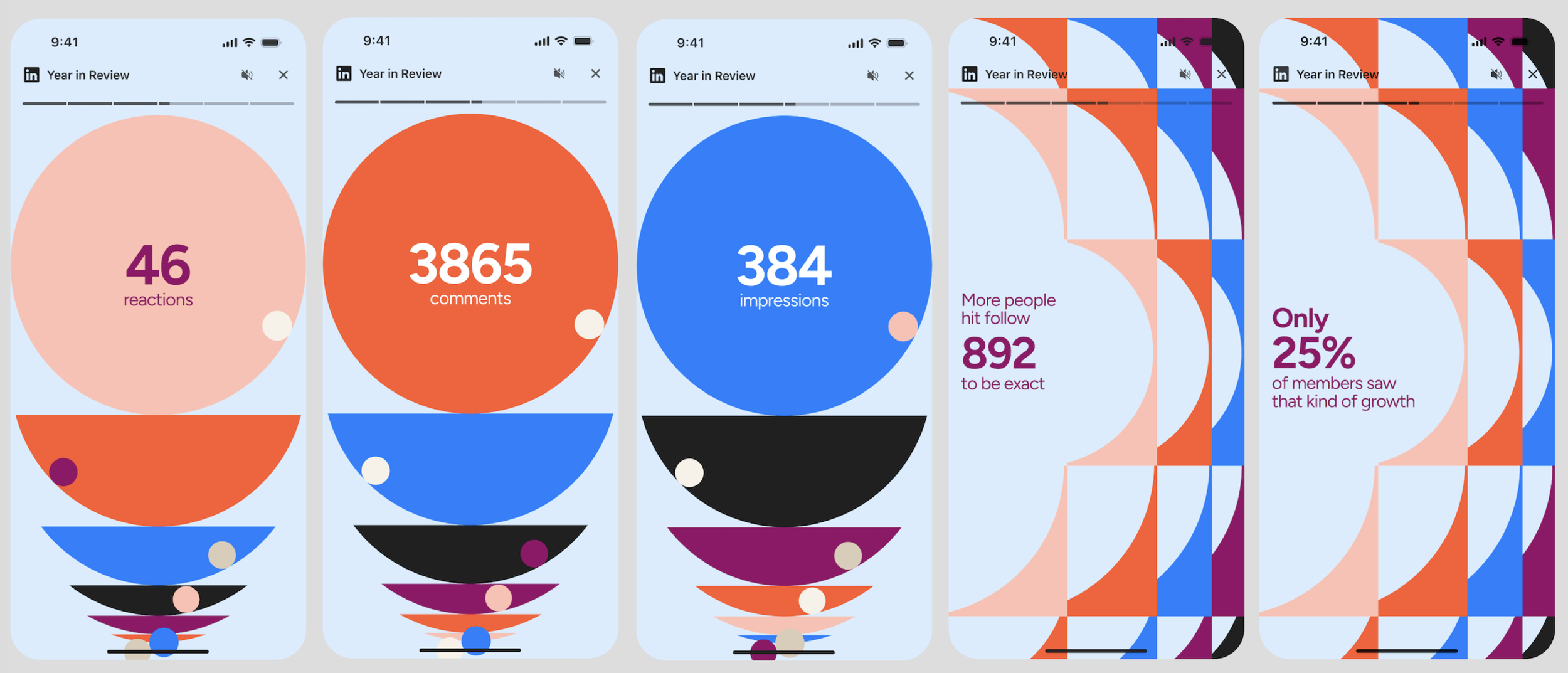
BRINGING MY SPECIALITIES INTO PLAY: At a crucial juncture, one faction of VPs wanted to slash a part of the flow the entire working team believed was a key anchor to the experience. I proposed to the team to give me 24-hours to get member feedback via our design-led research program. Usually this would take several days to turn around, but as an early pioneer of the program, I was able to jump in right away and prep two sets of A/B tests, launch the studies, analyze the results, and create a writeup for the following morning’s standup. This convinced the VPs to keep this crucial story moment, which then became one of the more popular screens, especially in our growth markets.
LAUNCH N’ STATS: 9.1M members opened their Year in Review, with an 86% completion rate, signaling strong interest. The feature generated 555K total conversations, including 294K posts and 261K direct messages. Over 88% of tracked mentions reflected themes like community support, connection, and gratitude. Off platform buzz & coverage included 20 articles, 55% Tier 1, 83% positive-neutral sentiment. The 2025 Year in Review was available to eligible members from mid-December 2025 to end of January 2026.
YEAR IN REVIEW: sample screens
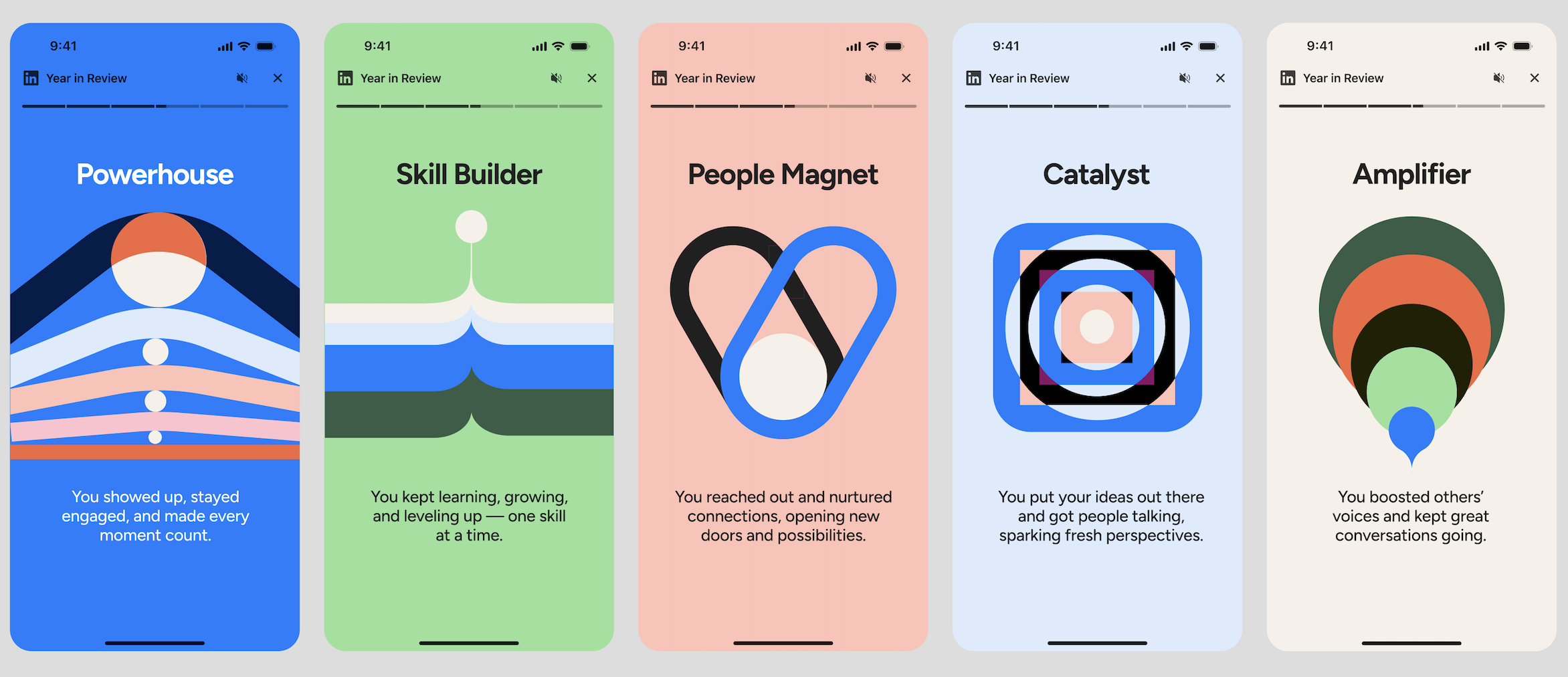
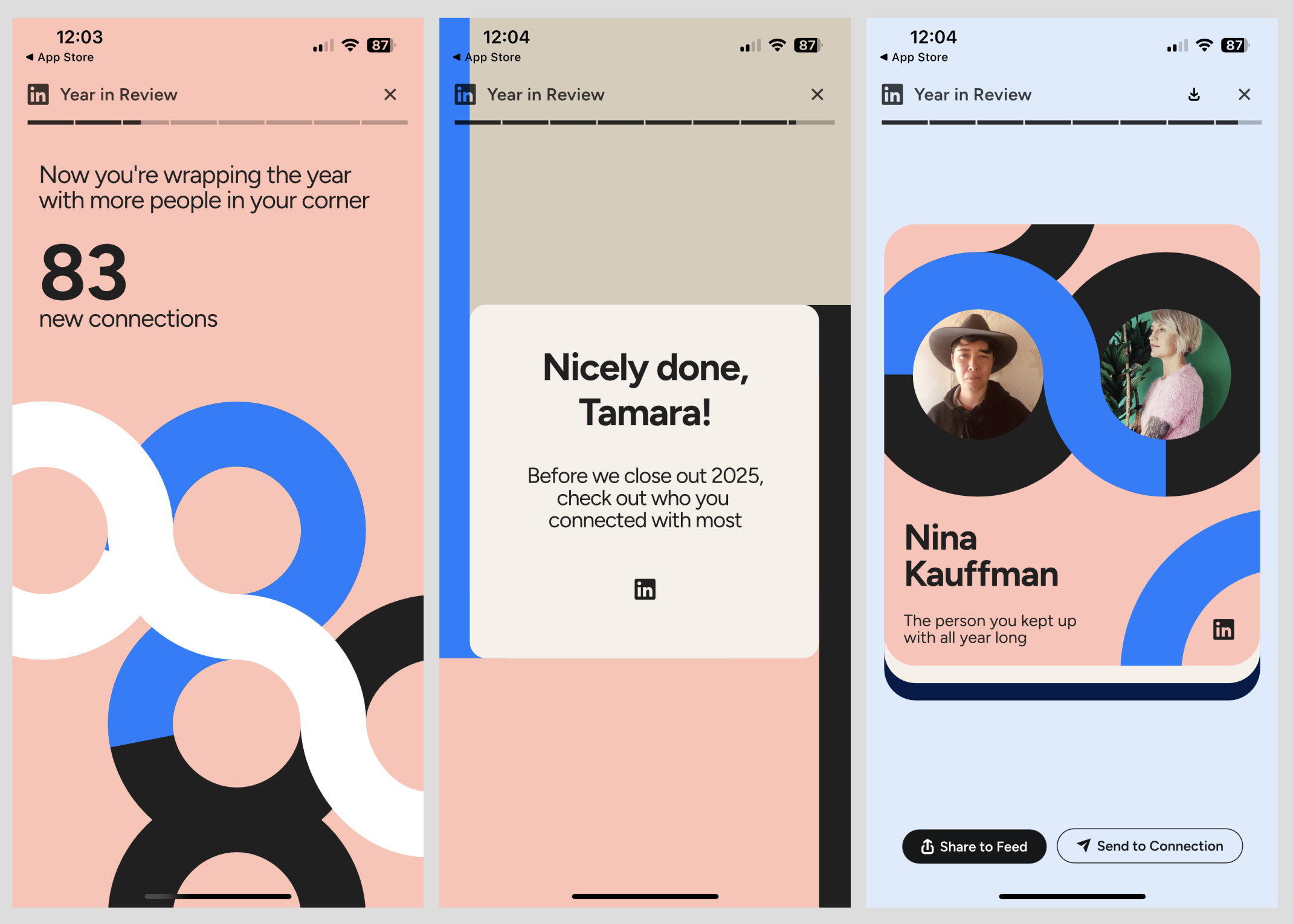
YEAR IN REVIEW: Topline from the designer-led observations (aka DLO) UXR study I executed in less than 24-hours that ended up saving the archetype screens
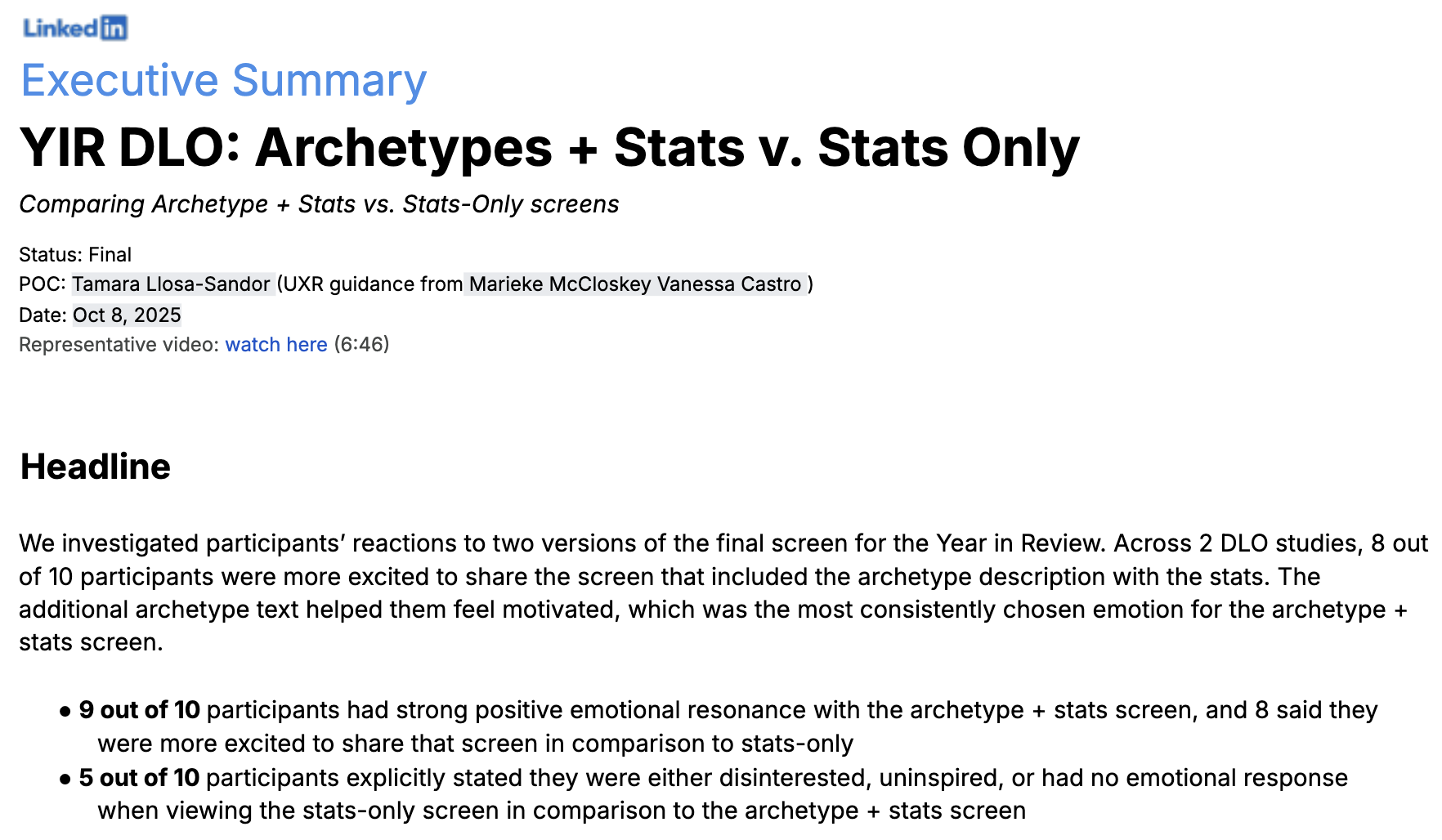
YEAR IN REVIEW: A slice of the storyboard process…
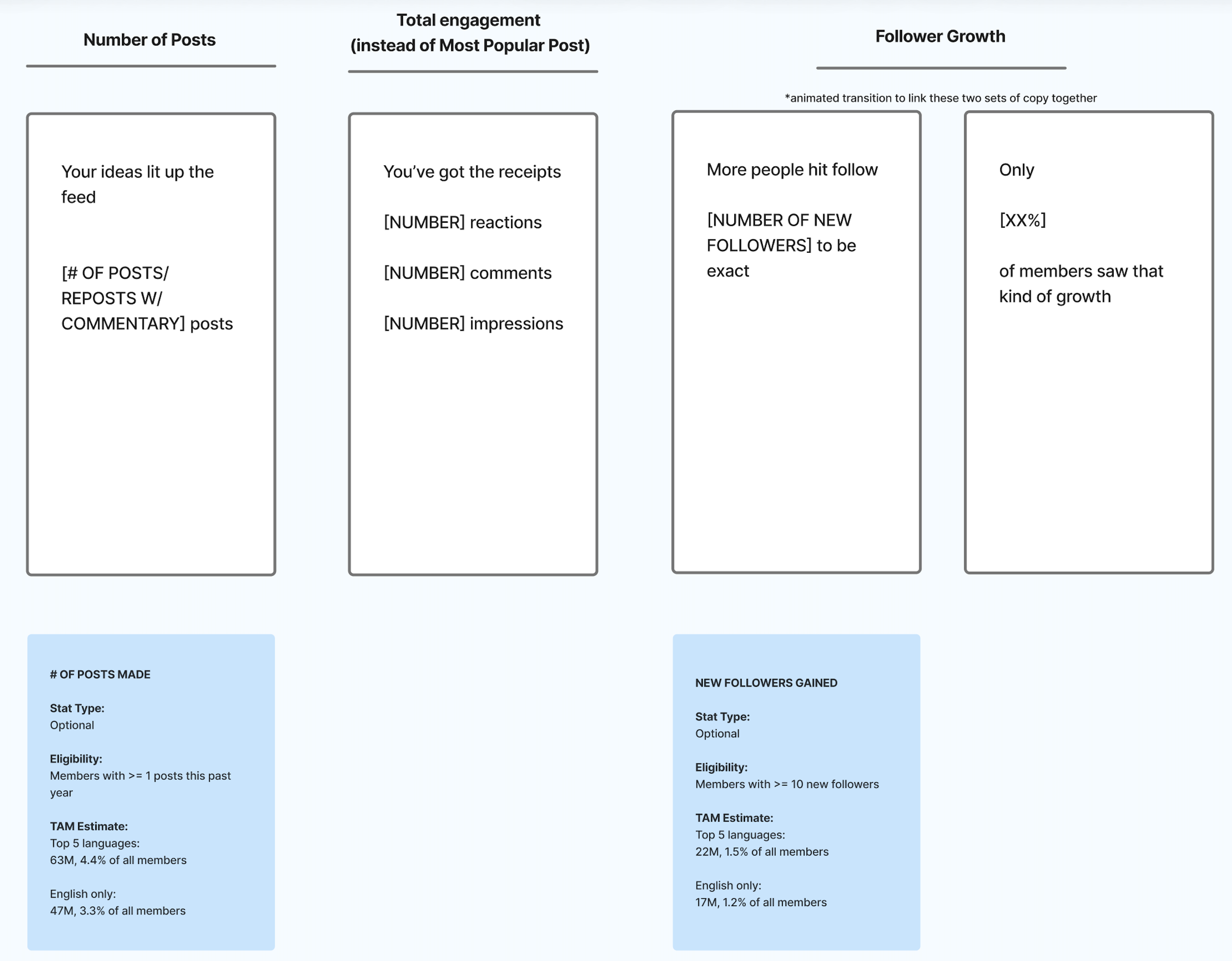
SEMANTIC SEARCH
THE SITUATION: We all know it! Search changed the moment ChatGPT dropped. The era of keywords, filters, and tailored boolean started to shift toward natural language, aka semantic search. LinkedIn has a number of legacy search verticals for professionals, including job listings and people/network, that were prime to make this transformation.
THE CHALLENGE: Like all legacy internet companies with tech stacks built like archaeological layers, making this shift was easier said than done. Semantic Search was a deeply technical challenge and a design/UX challenge. Even as engineers heroically tackled remaking the tech stacks, Product, Design, and Marketing melded minds to think through how to start shifting member search behavior that had essentially been the same for 20 years.
MY ROLE: I spearheaded content design for both Semantic Job Search (SJS) and Semantic People Search (SPS), helping to bridge the two teams and workflows. SJS had almost a year head start on SPS, and I knew we needed to aim for cohesion across search verticals. Getting ahead, I developed a Semantic Search Content Playbook from our SJS work that could scale to each new semantic search project. This wasn’t just about internal alignment but a key to creating consistency for our members as they did what they needed to do across the platform. I worked closely with cross-functional partners to create and launch the member-facing experience, from onboarding to search field ghost text to instructional moments to thought-starters to error messages that redirected folks vs. being dead ends.
BRINGING MY SPECIALTIES INTO PLAY: I conducted an in-depth research audit across the Search and LLM landscape and developed actionable takeaways to help guide the projects. And, my favorite, deployed quick turnaround designer-led observation UXR studies (DLOs) to land the team on content direction for launch.
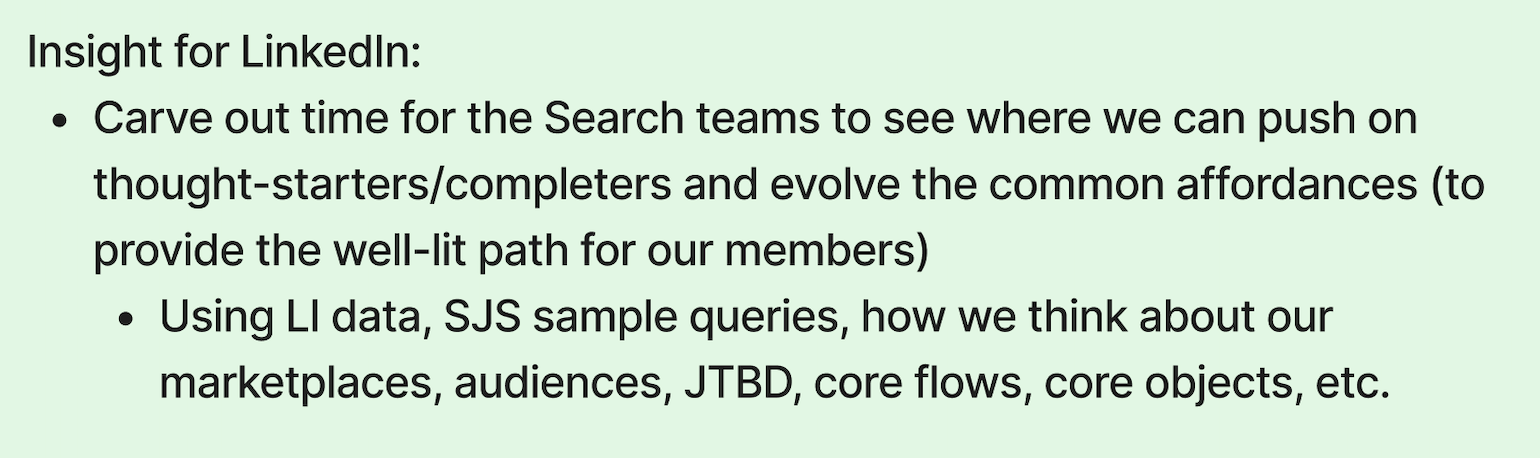
AI IN THE MIX, FOR EXAMPLE: To generate LinkedIn-specific thought-starters for member onboarding, I jammed with ChatGPT (at that moment our only data-safe GenAI enterprise account) to quickly combine our extensive Audiences and Jobs To Be Done documentation with a series of prompts. The results accelerated our product, marketing, design workstream pod on a task that would ordinarily have taken a couple weeks to a couple days. Seems quaint now with LLM and coding agent abilities exploding, but at the moment, this was strong emoji arm.
LAUNCH: Both SJS and SPS are live, having successfully made the transition to a GenAI tech stack. Members are increasingly using natural language to search for jobs and people, dispensing with filters and simply adding their criteria directly into their search.
*EXTRA! EXTRA! AI EXPERIMENT LEARNING CURVE: Sharing this as another example of LLM use at the time. One exec wanted a “reasoning sentence” to appear above the search results that would show off how smartly the results were collated. However, it wasn’t cost-effective to deploy the reasoning powers of LLMs for every search in terms of crafting such a UI moment. So, my product partner and I spent a few sleepless days working with GenAI to develop “madlibs” logic then doing evals on sets of queries run through the logic engine. While this launched with MVP but was eventually deprecated, it was still a learning curve moment for myself in what I call “using AI to do AI,” a core methodology I return to even as the LLM and coding agent capabilities continue their exponential expansion.
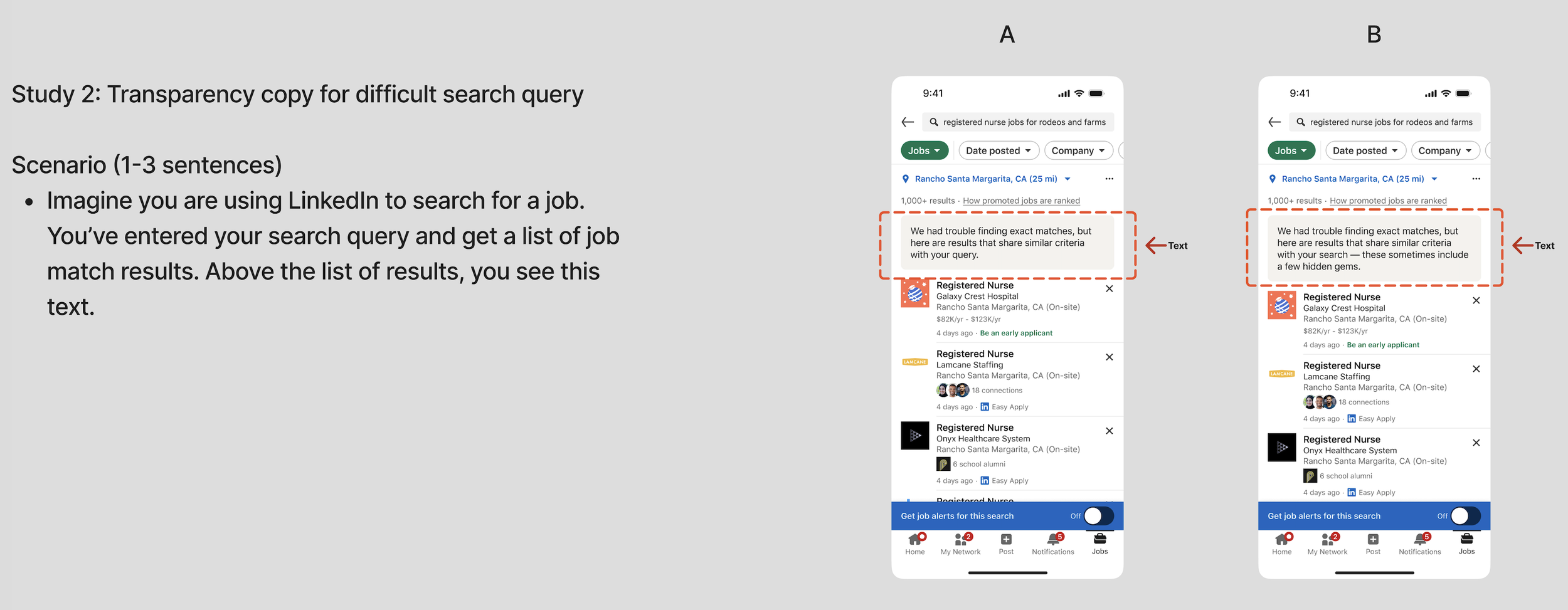
SEMANTIC SEARCH: Example from Content Playbook: Transparency messages
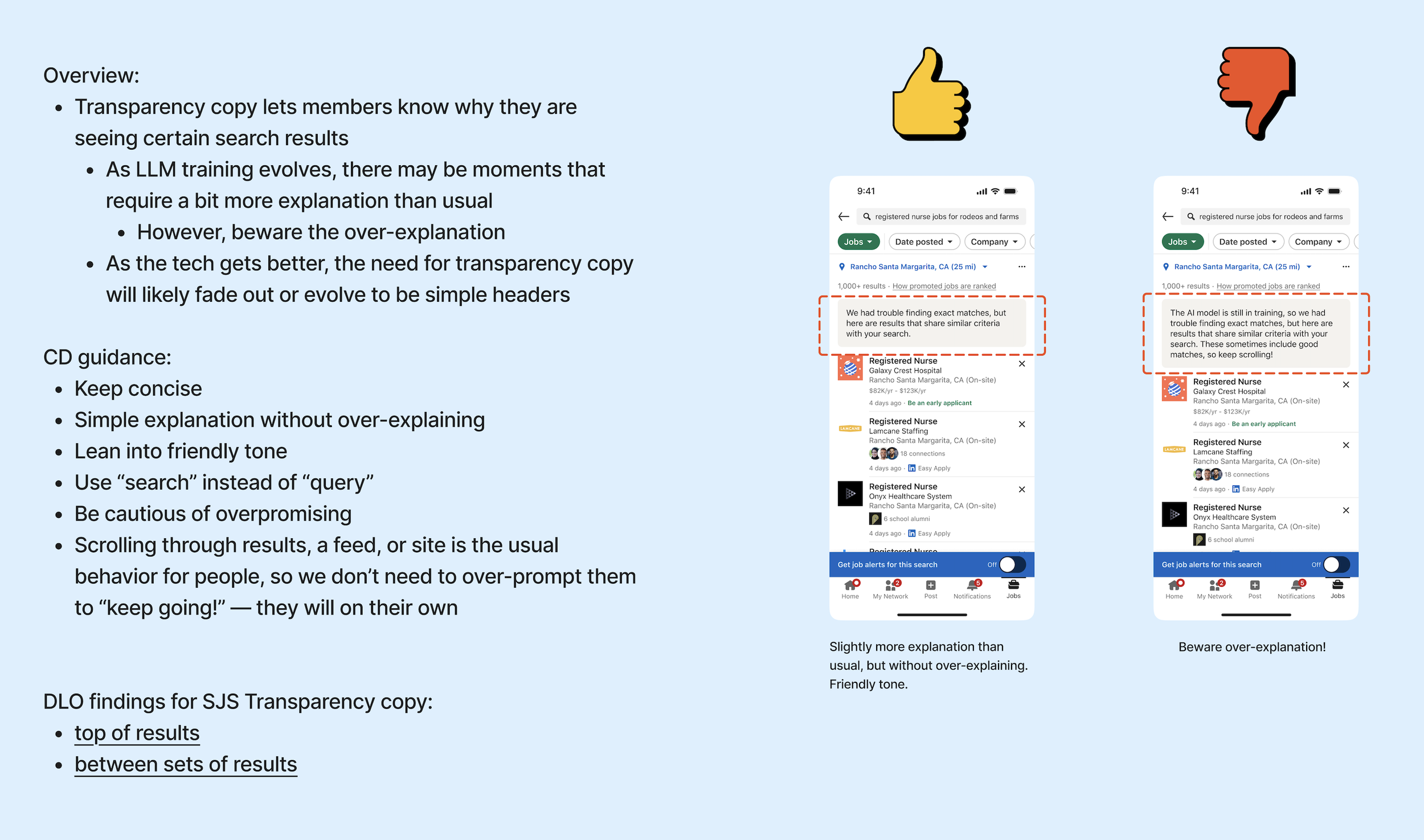
SEMANTIC SEARCH: Example from Content Playbook: Onboarding/education
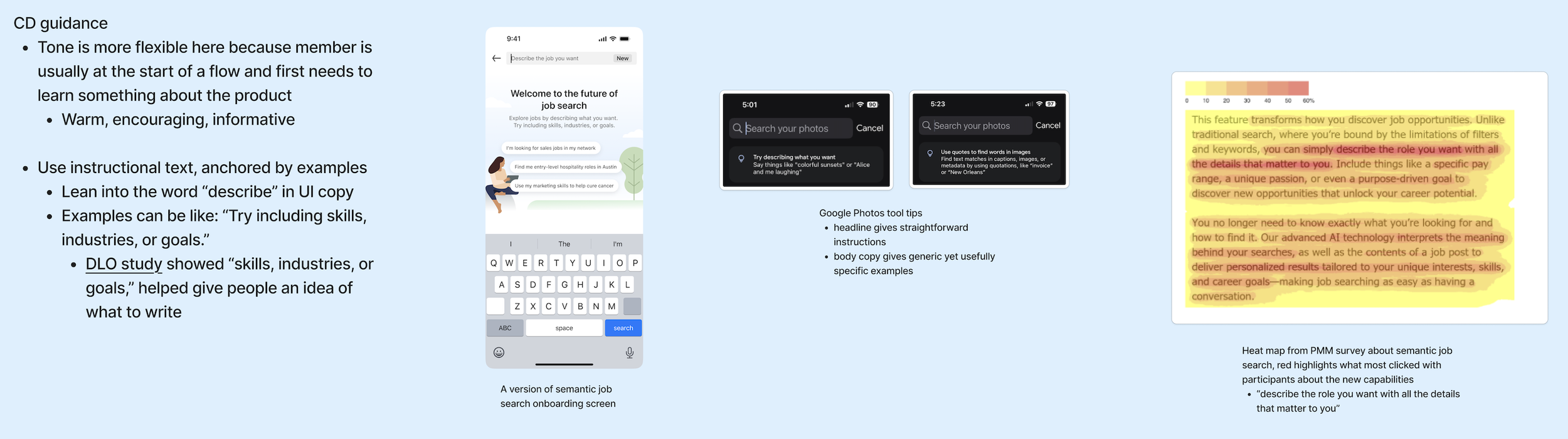
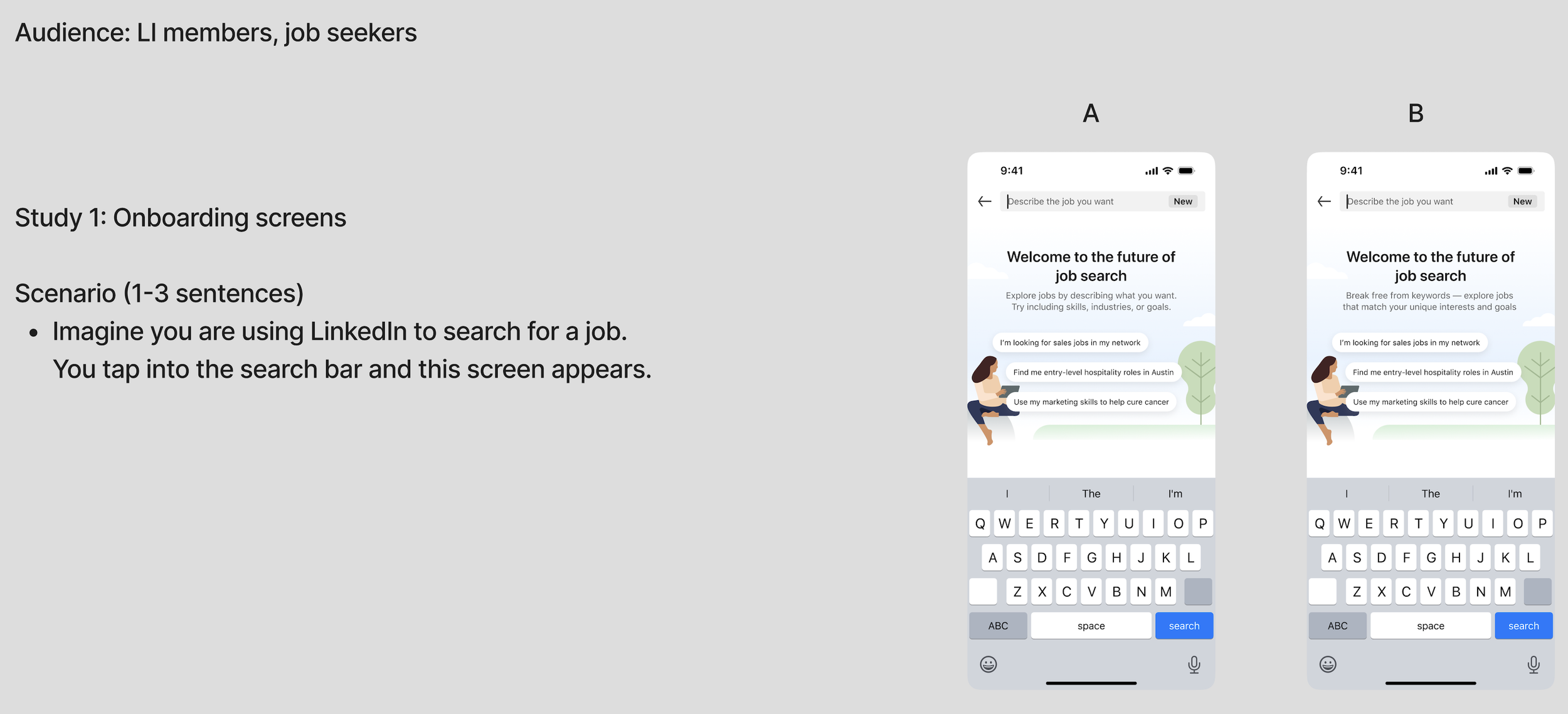
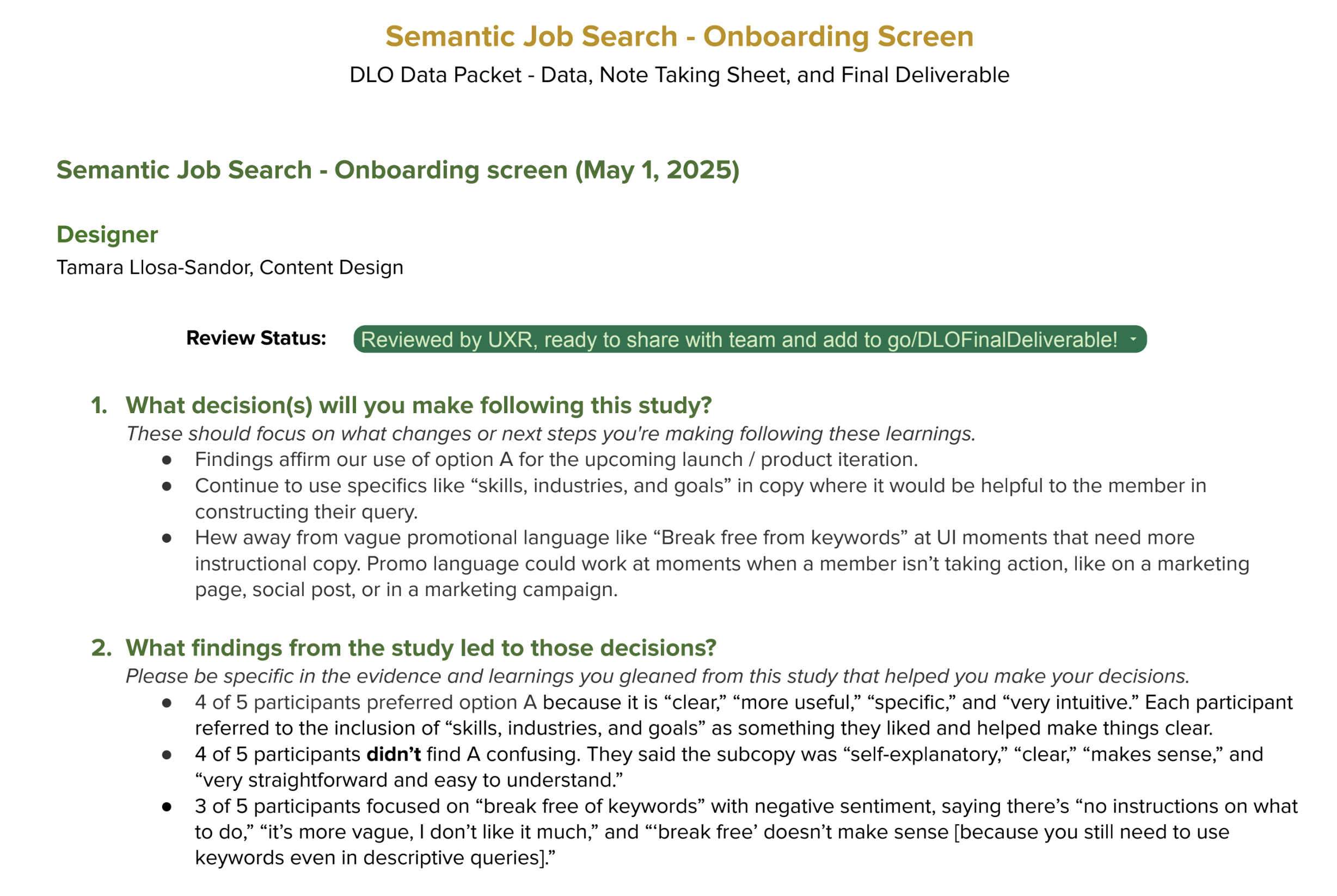
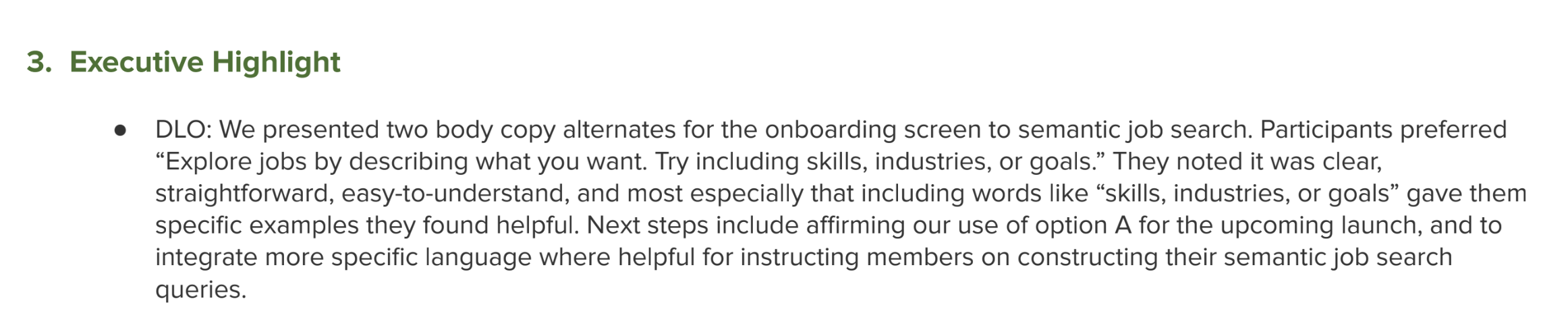
SEMANTIC SEARCH: Designer-led observations UXR for onboarding screens. Results crystallized our direction and lean into straightforward instructional language.
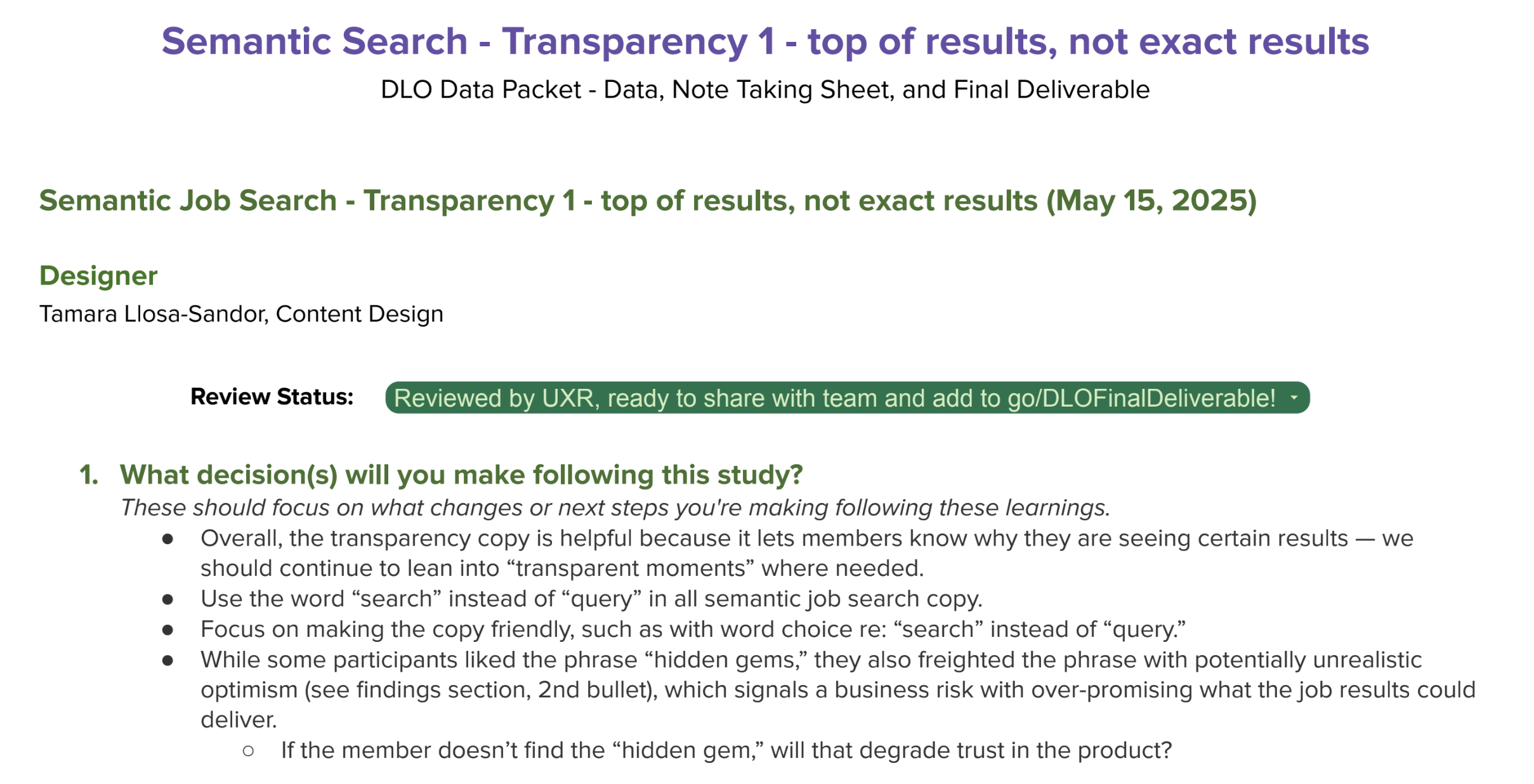
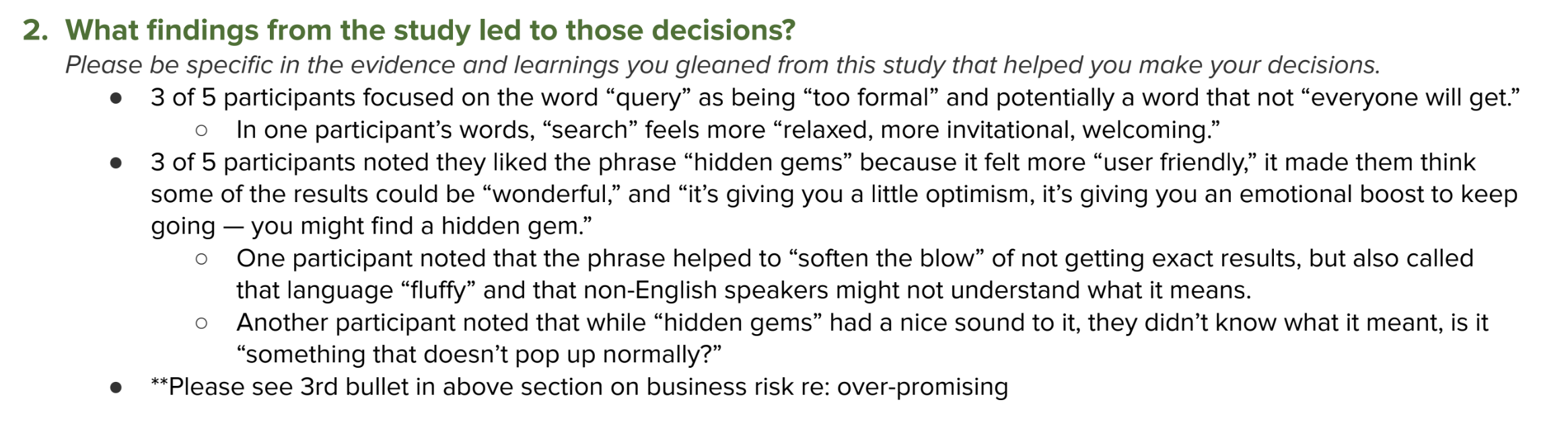
SEMANTIC SEARCH: Designer-led observations UXR for transparency messages

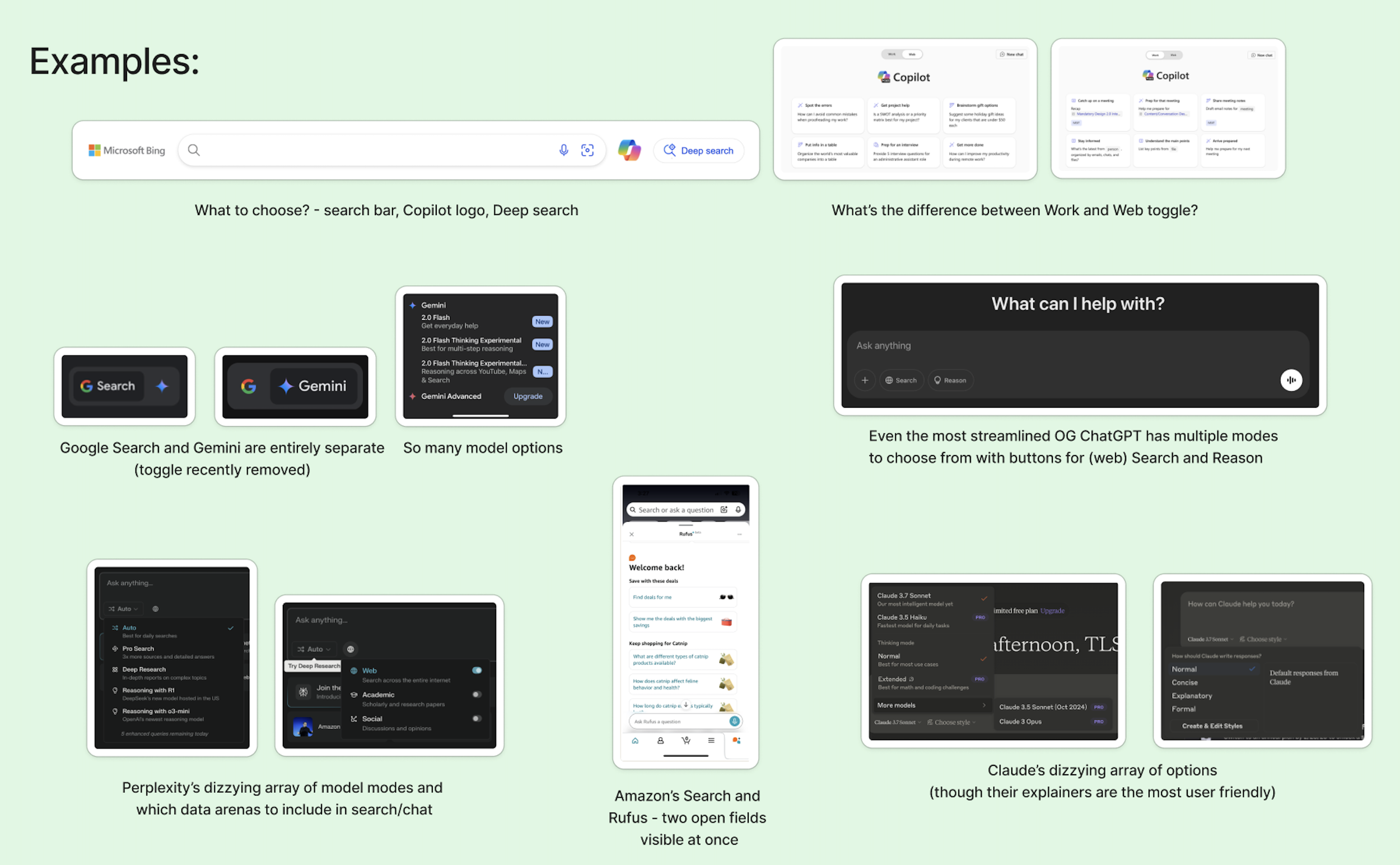
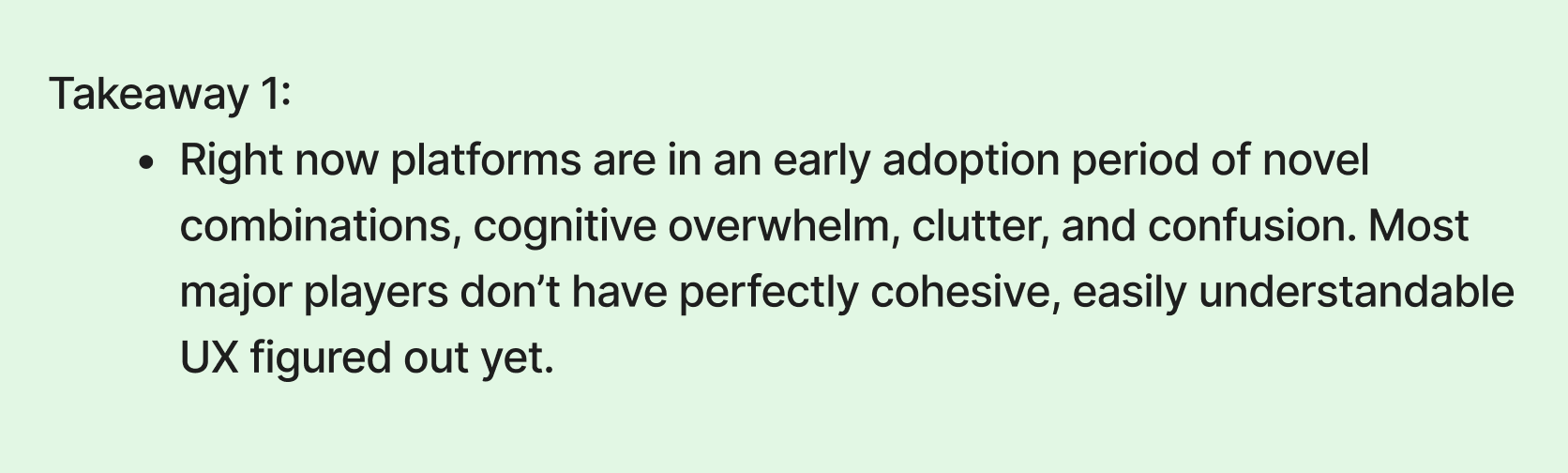
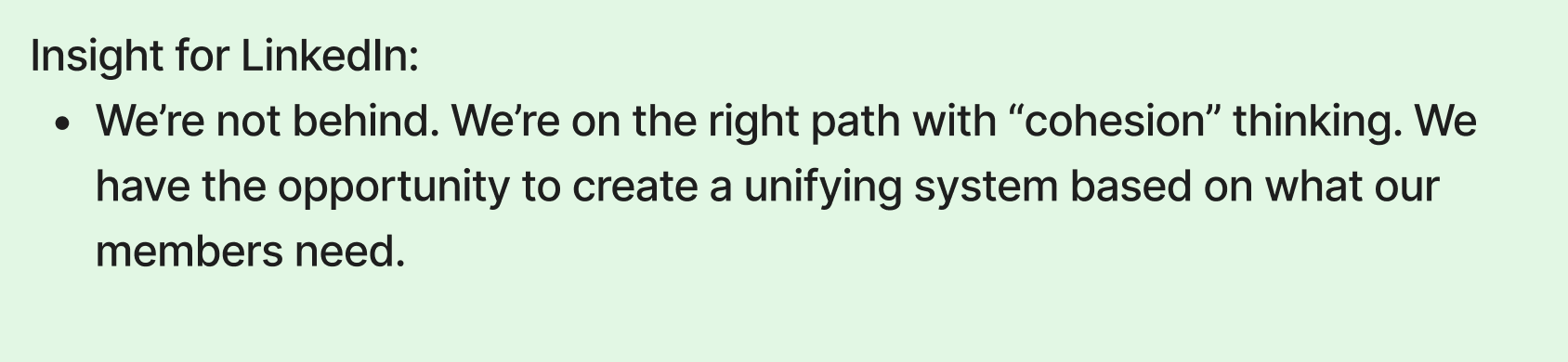
SEMANTIC SEARCH: Slice of audit process. Gave the team a better understanding of the overall Search and LLM landscape (fall 2025), and reaffirmed cohesion as a core principle and the need for a scalable content playbook.
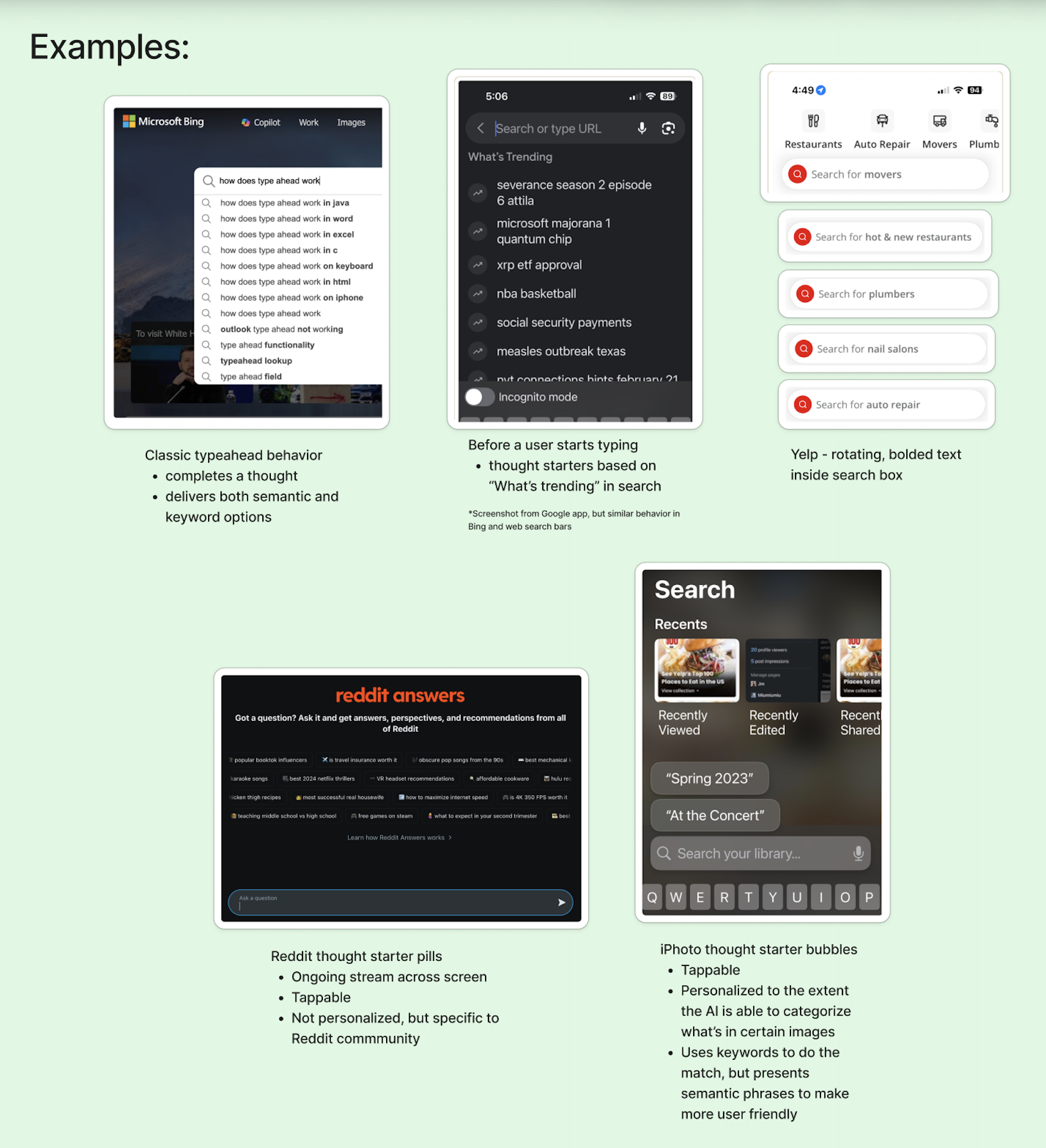
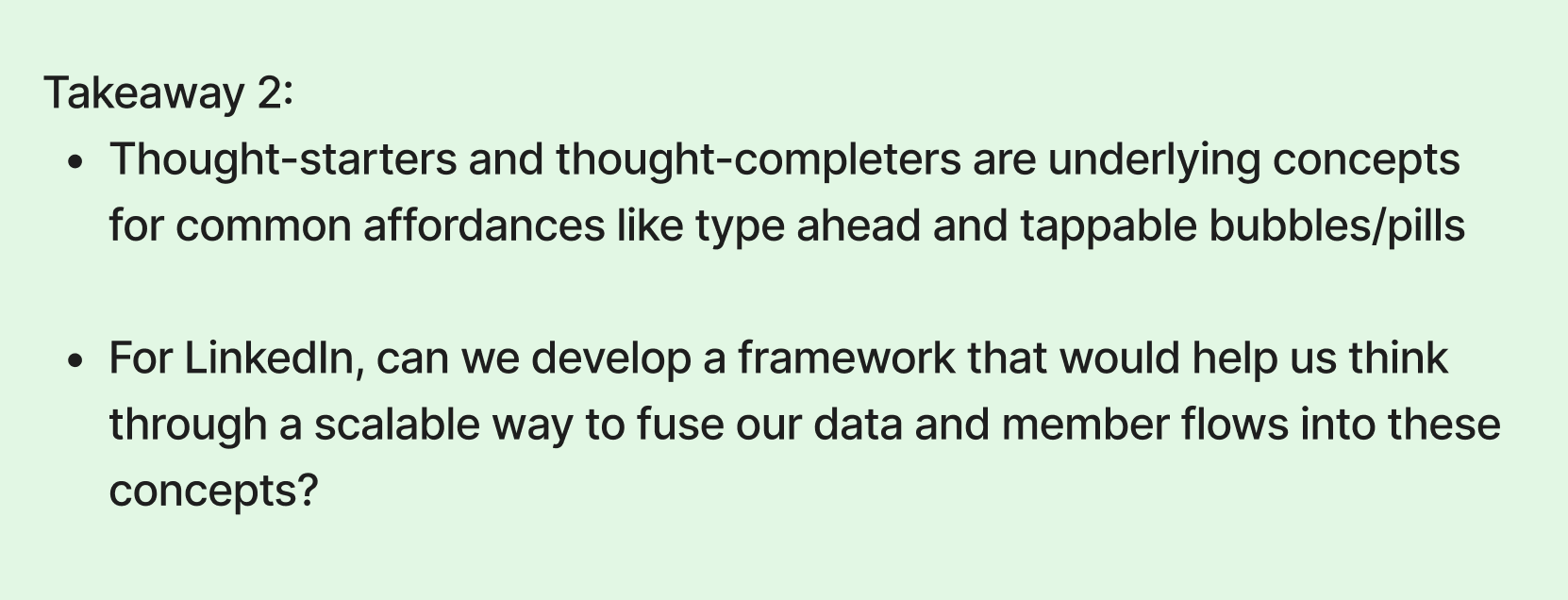
SEMANTIC SEARCH: Another slice of the audit process. Reaffirmed team’s development of LinkedIn-specific thought-starters to help members move toward natural language searches.
SEMANTIC SEARCH: Just for fun! As the team was starting to trim search filters to make way for all things semantic, I noodled with Google’s Veo to give these hardworking elements a well-deserved retirement send off ;)
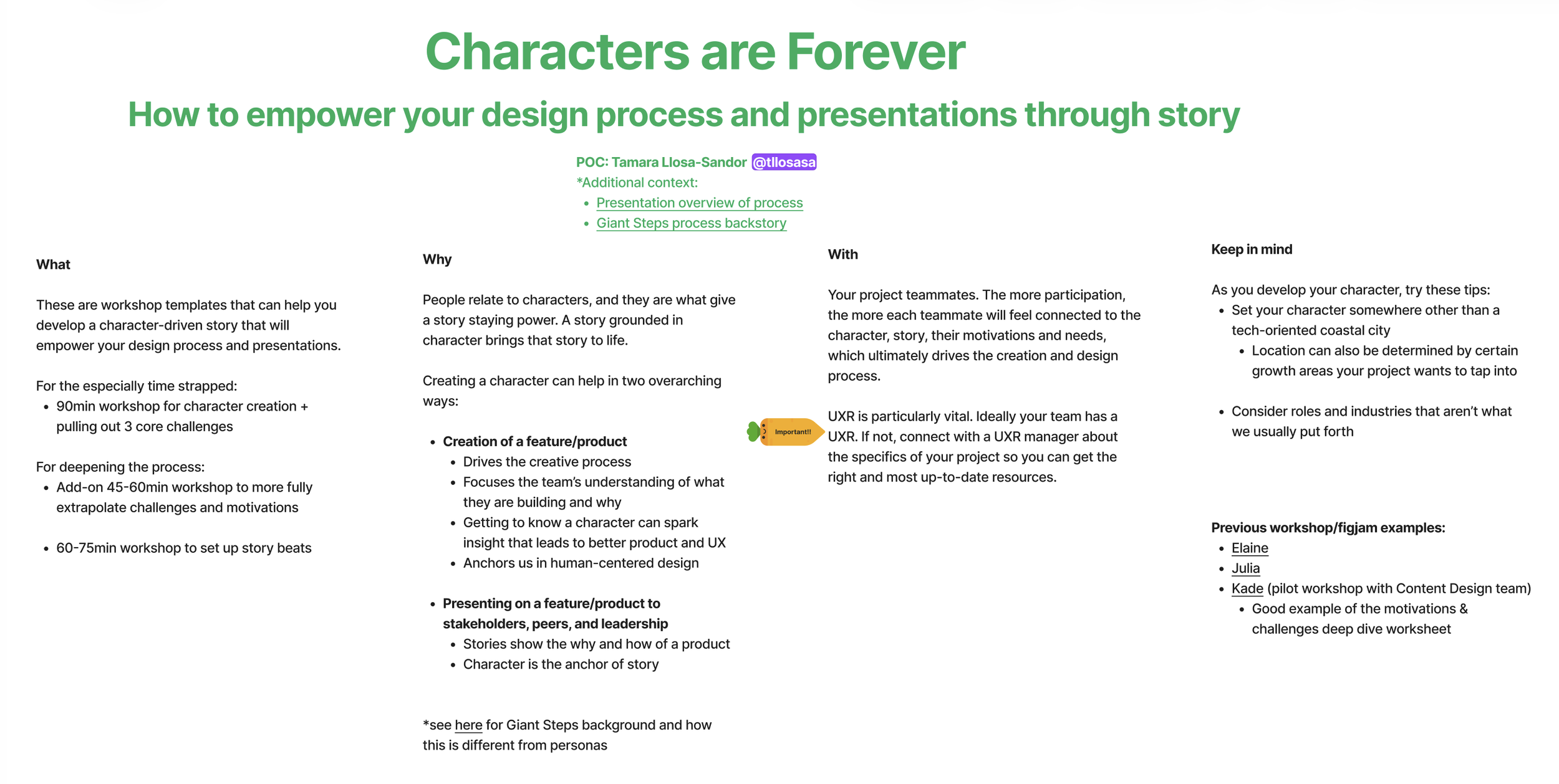
CHARACTERS ARE FOREVER: A story → design Methodology
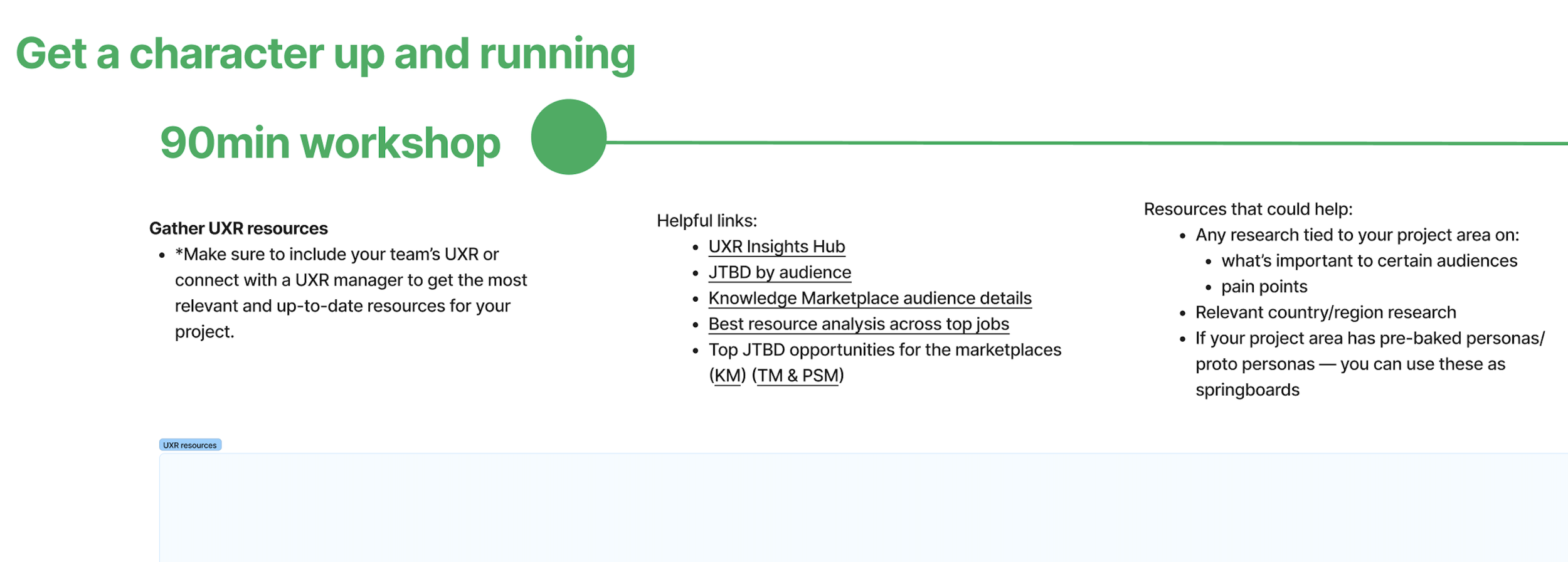
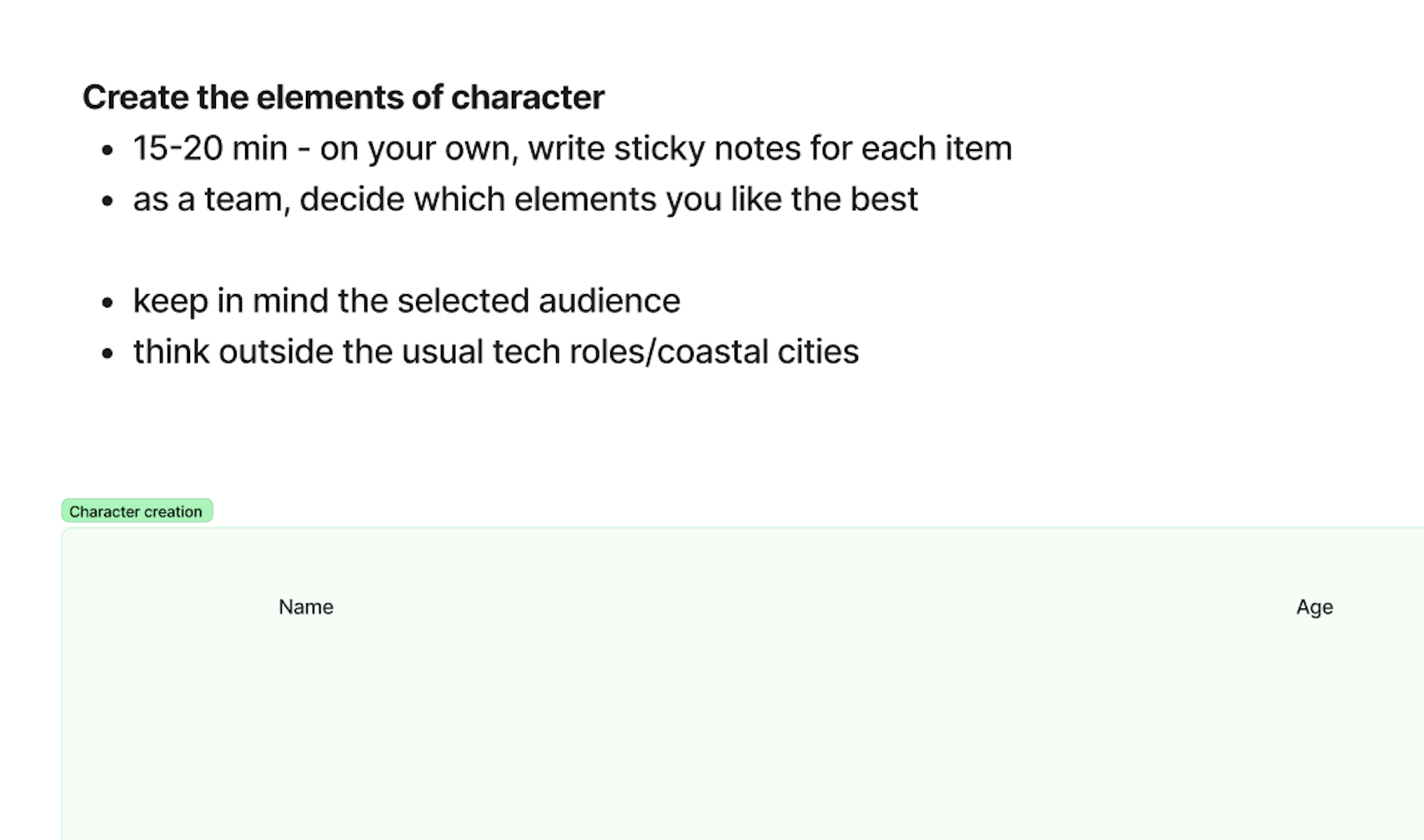
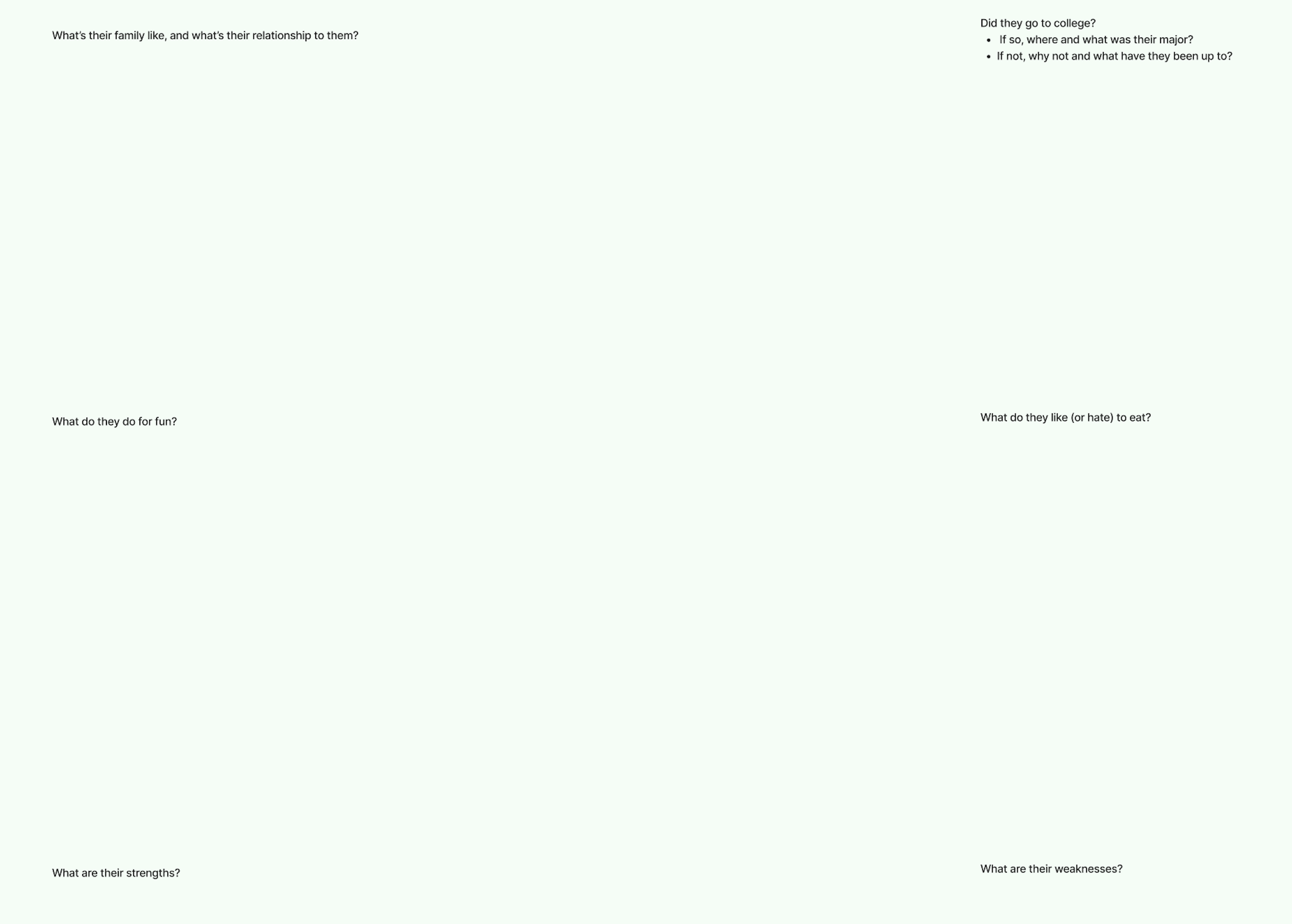
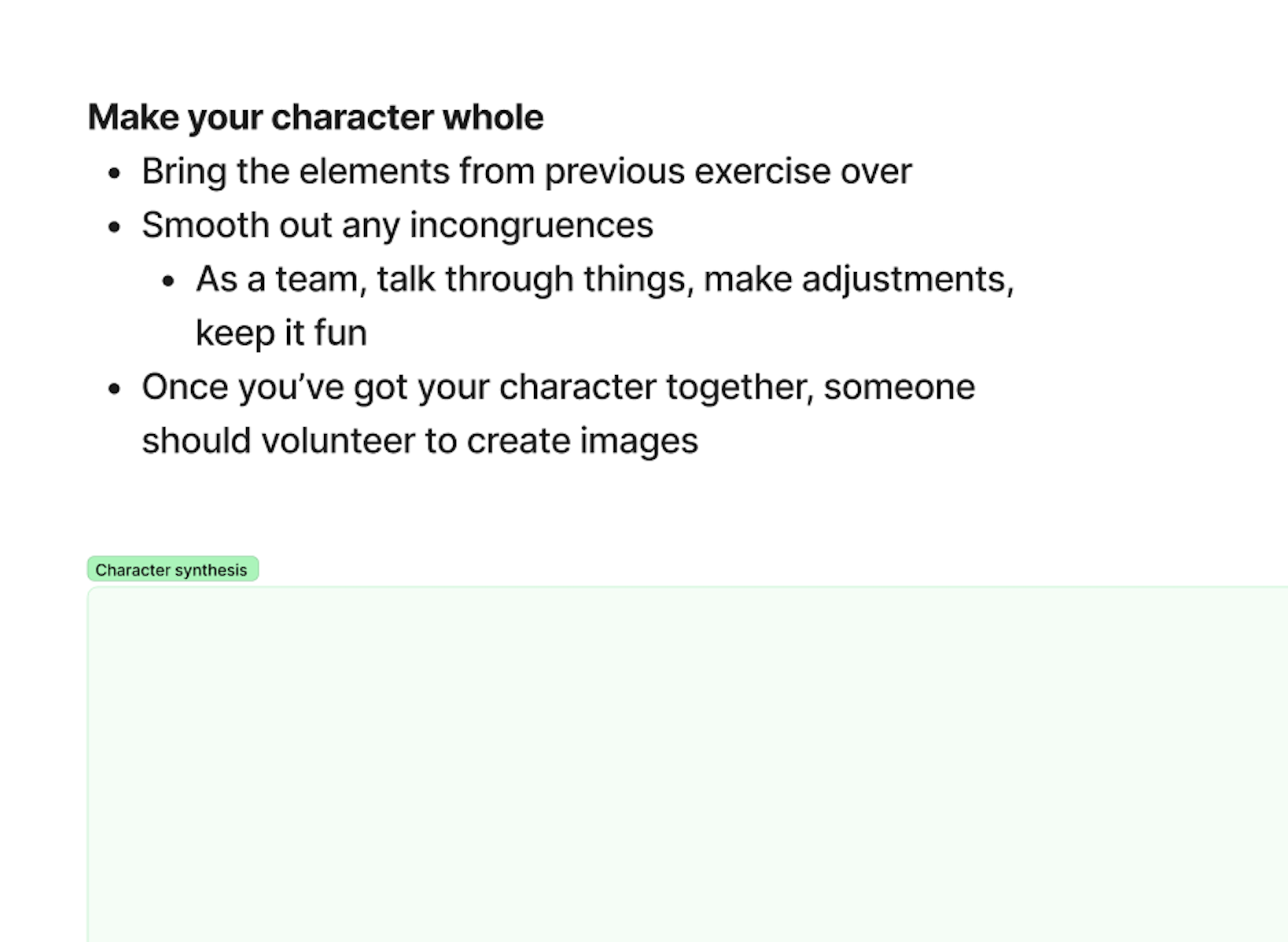
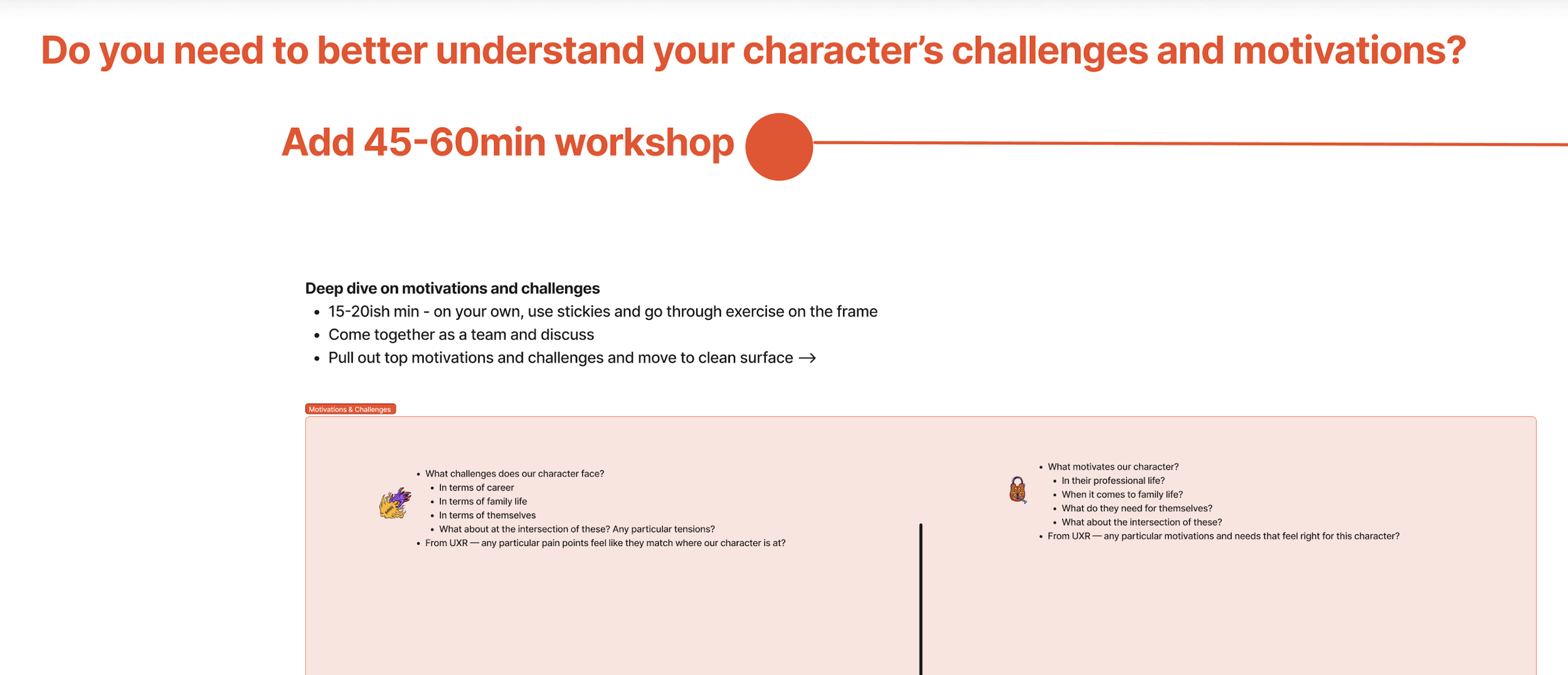
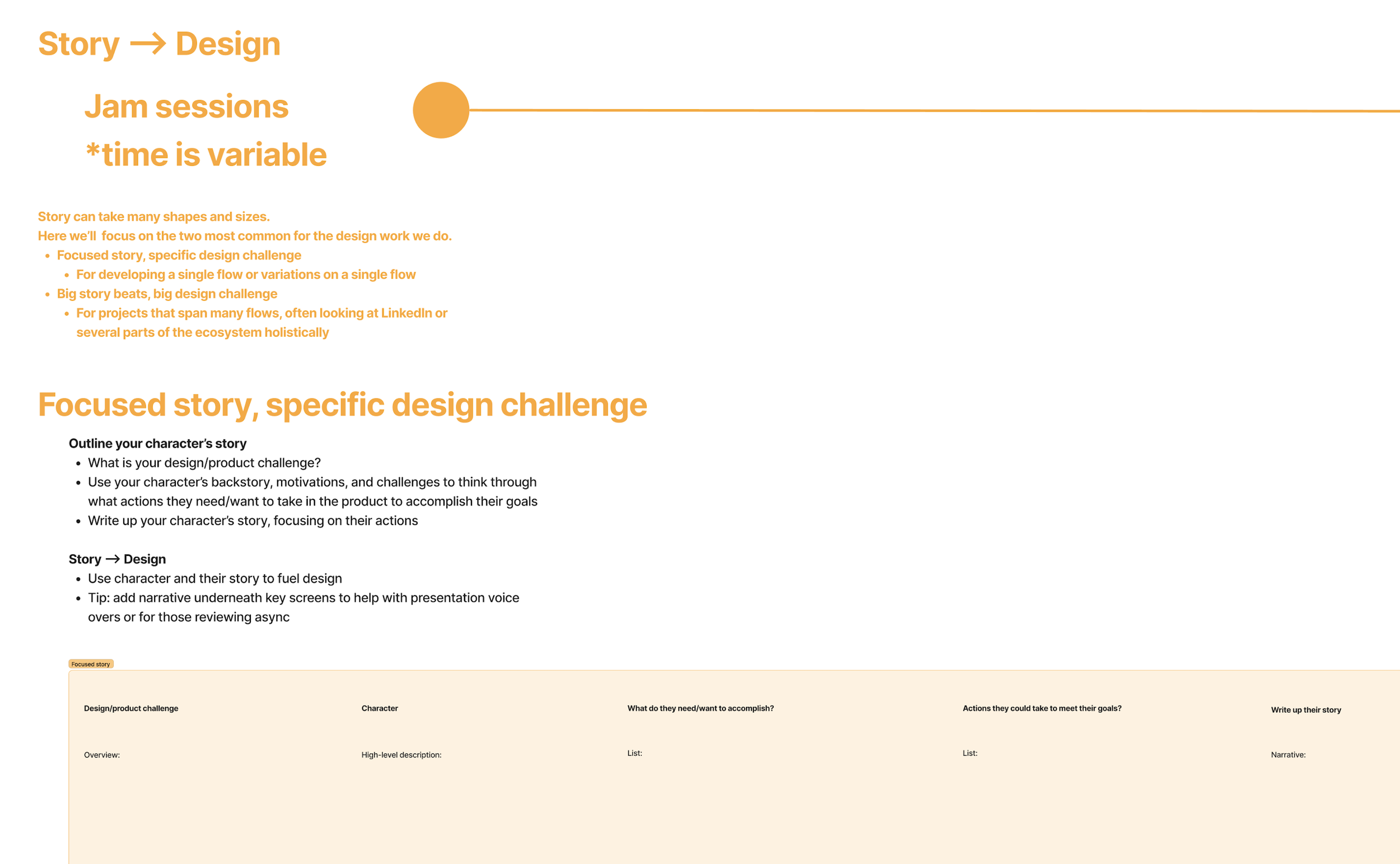
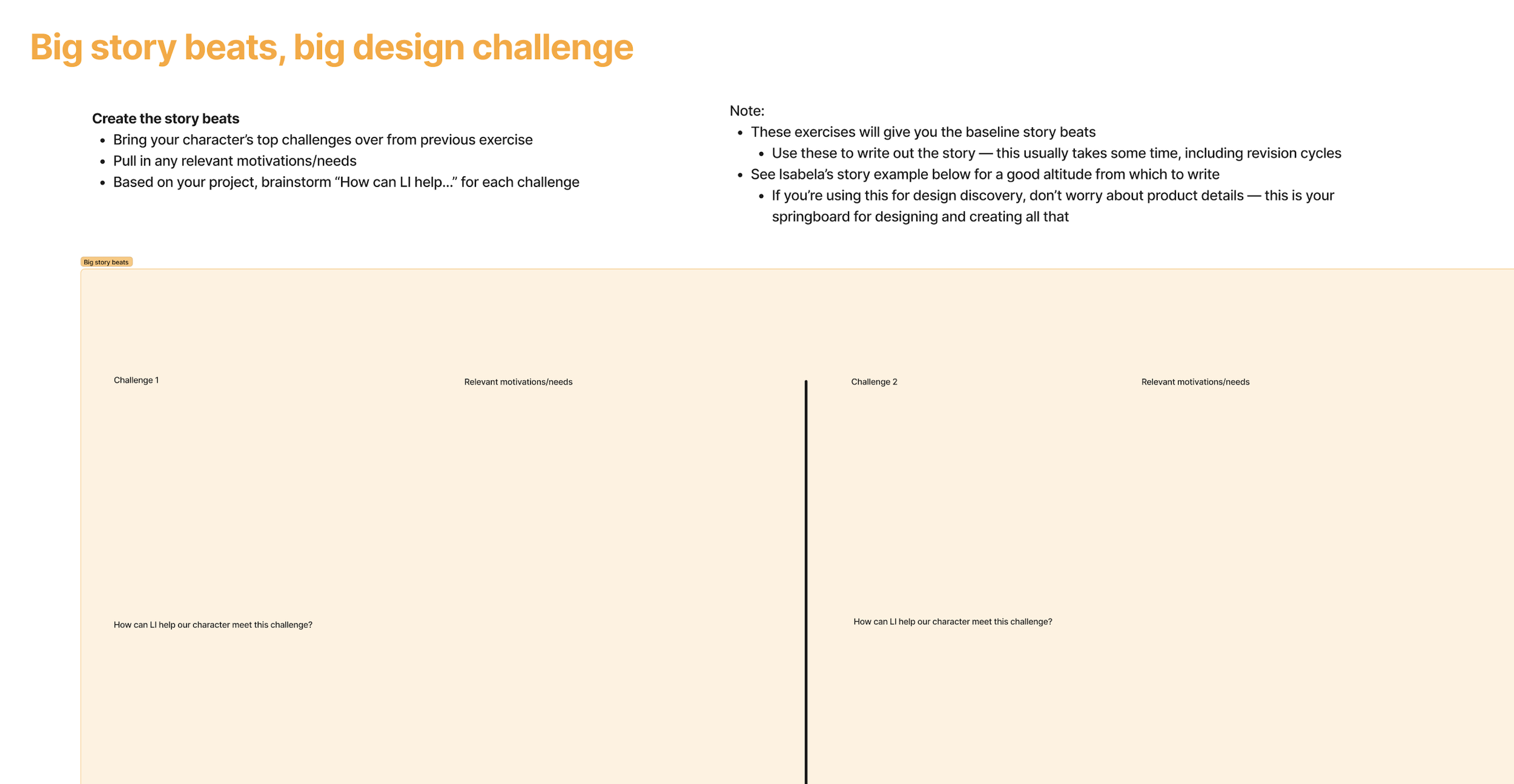
PERCOLATION: While working on a vision project, the team focused on developing characters and stories as a way to think through new designs and UX flows. We didn’t have a set process at first, but over time and a handful of characters, I decided to codify our exercises into a unified process so we could easily repeat and also share with other teams. This became the “Characters are Forever” workshop and reusable kit.
CIRCULATION: The workshop kit quickly became a high-leverage methodology. I ran workshops (both solo and with a UXR partner) for project teams to help get them set up with a character and story, and across the Design and UXR orgs to introduce and socialize the kit. One especially high point was UXR, Product, and Design adopting the kit for a cross-functional “Global Sprint” where each pod developed a character and storyline set in a growth market to then be used in developing the product roadmaps for those regions.
CRYSTALLIZATION: Check out the presentation below (collaboratively assembled and presented by the vision work team). Below that are slices from the Characters are Forever workshop kit.
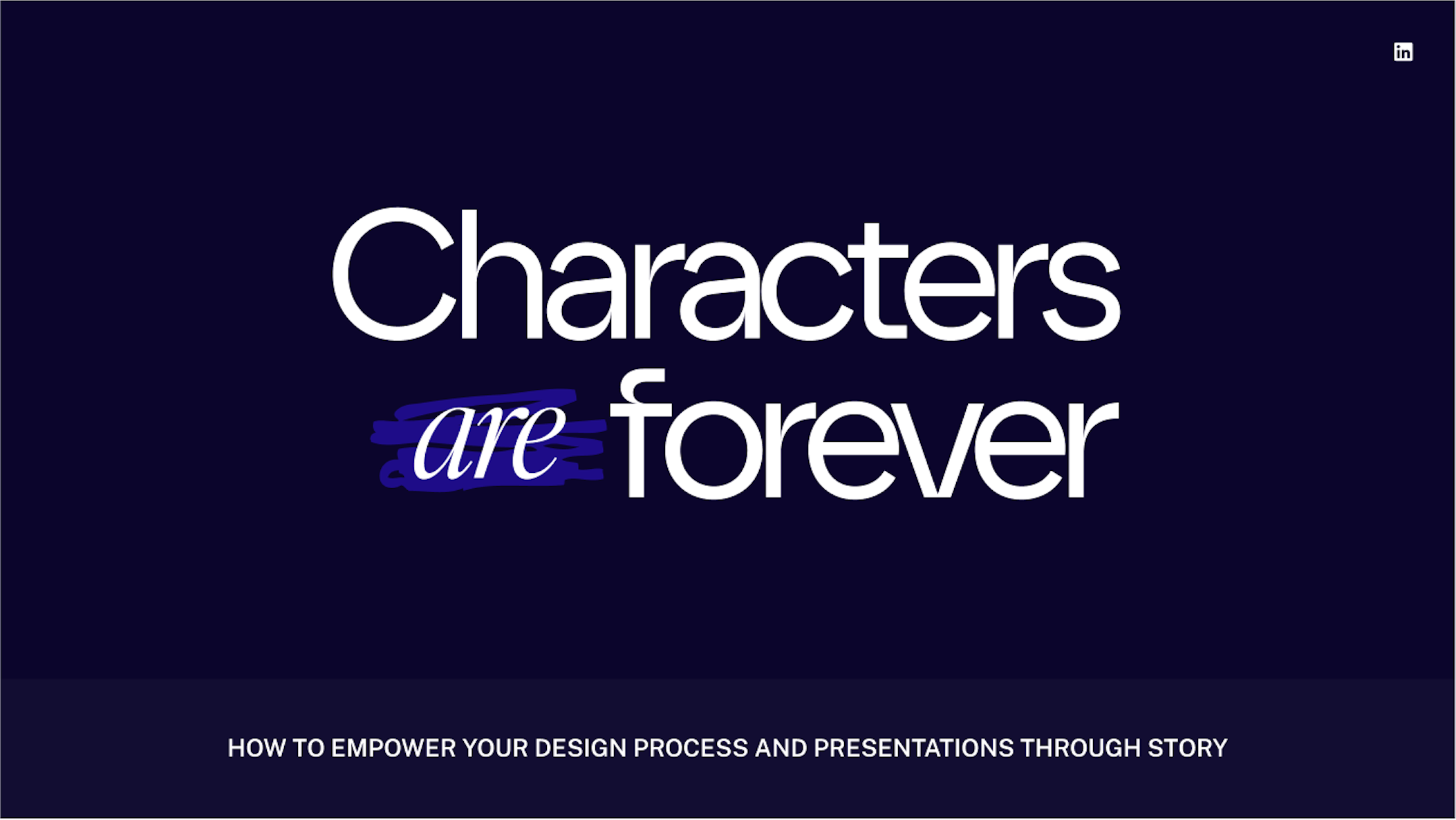
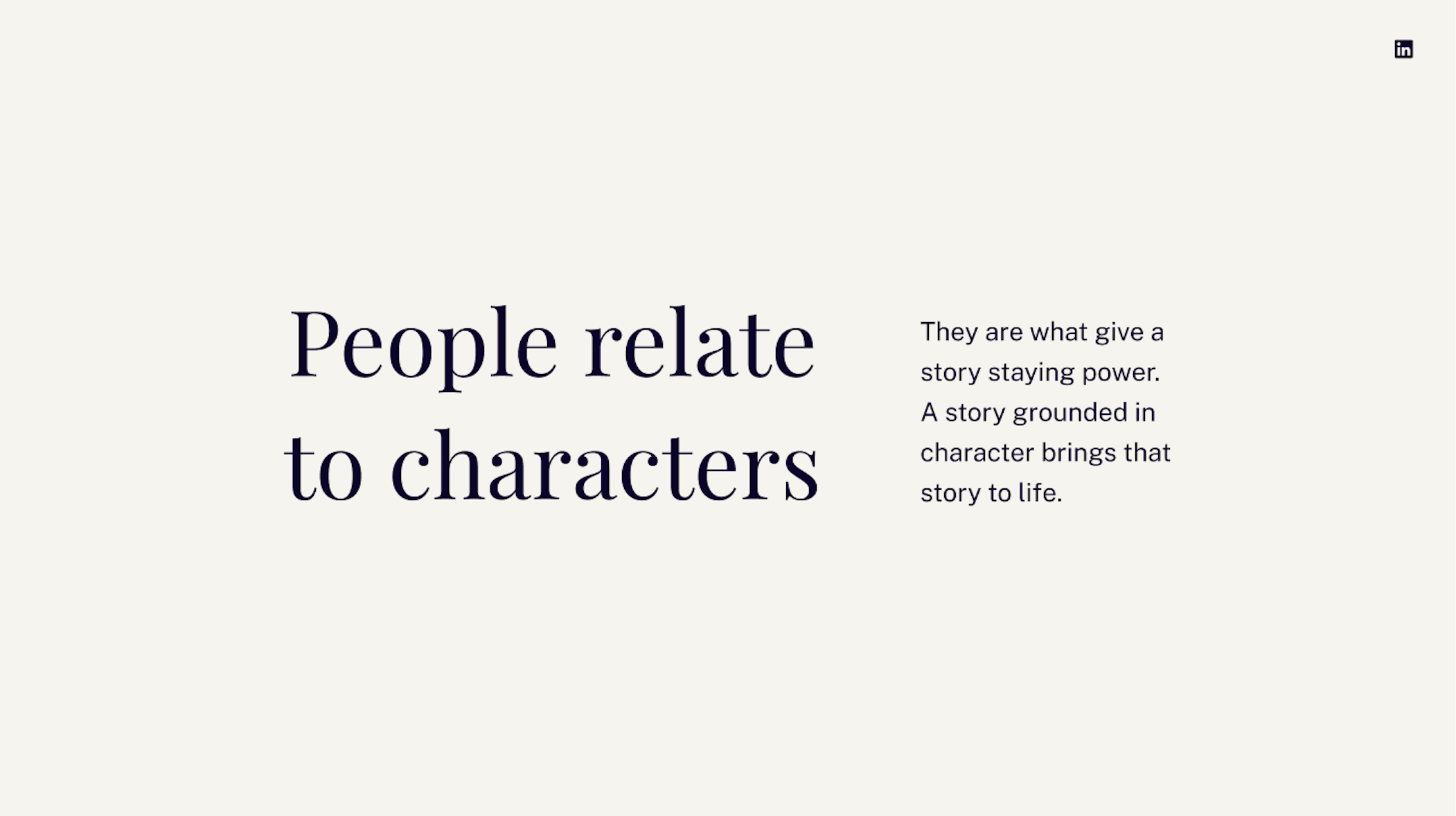
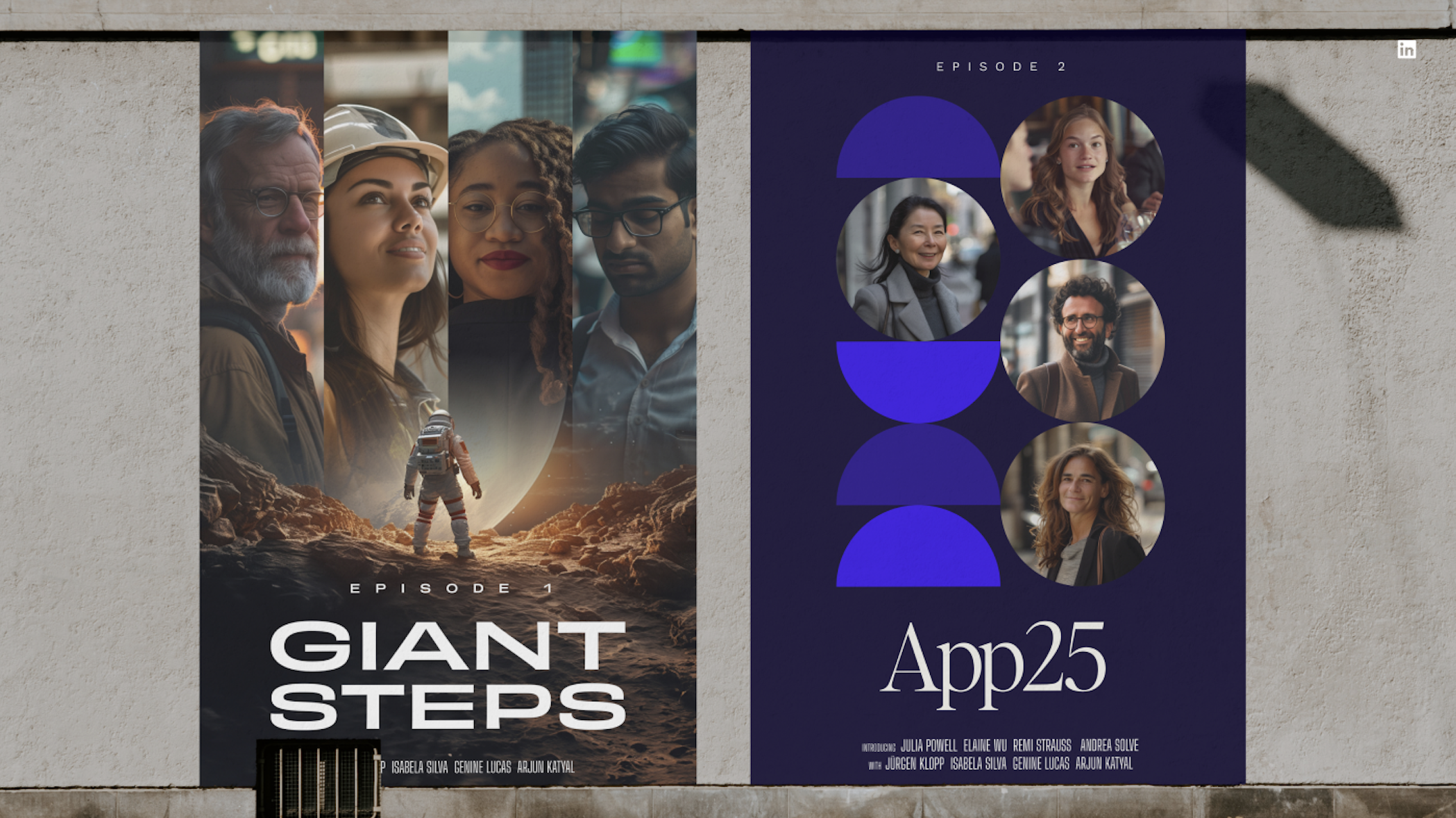
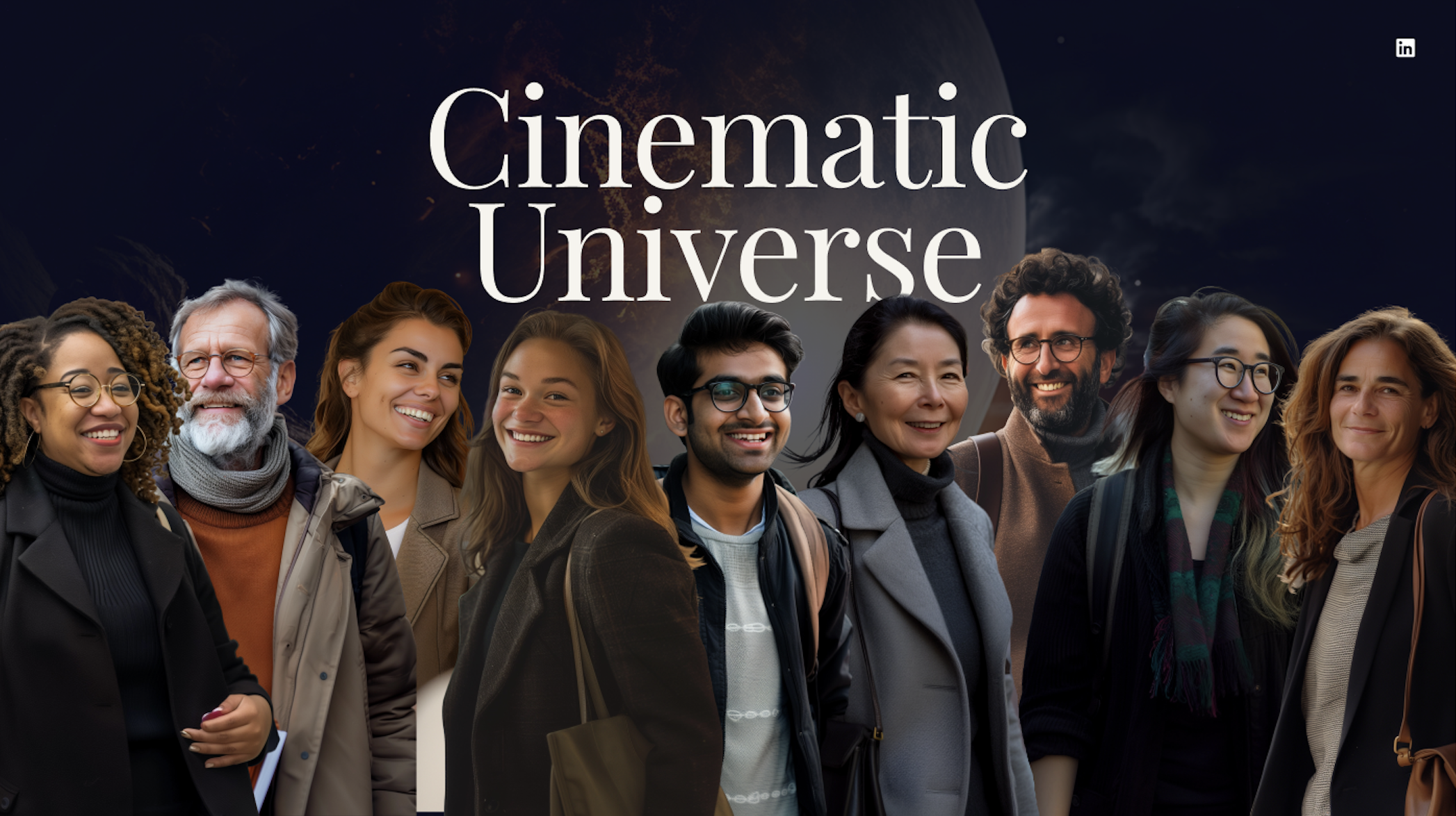
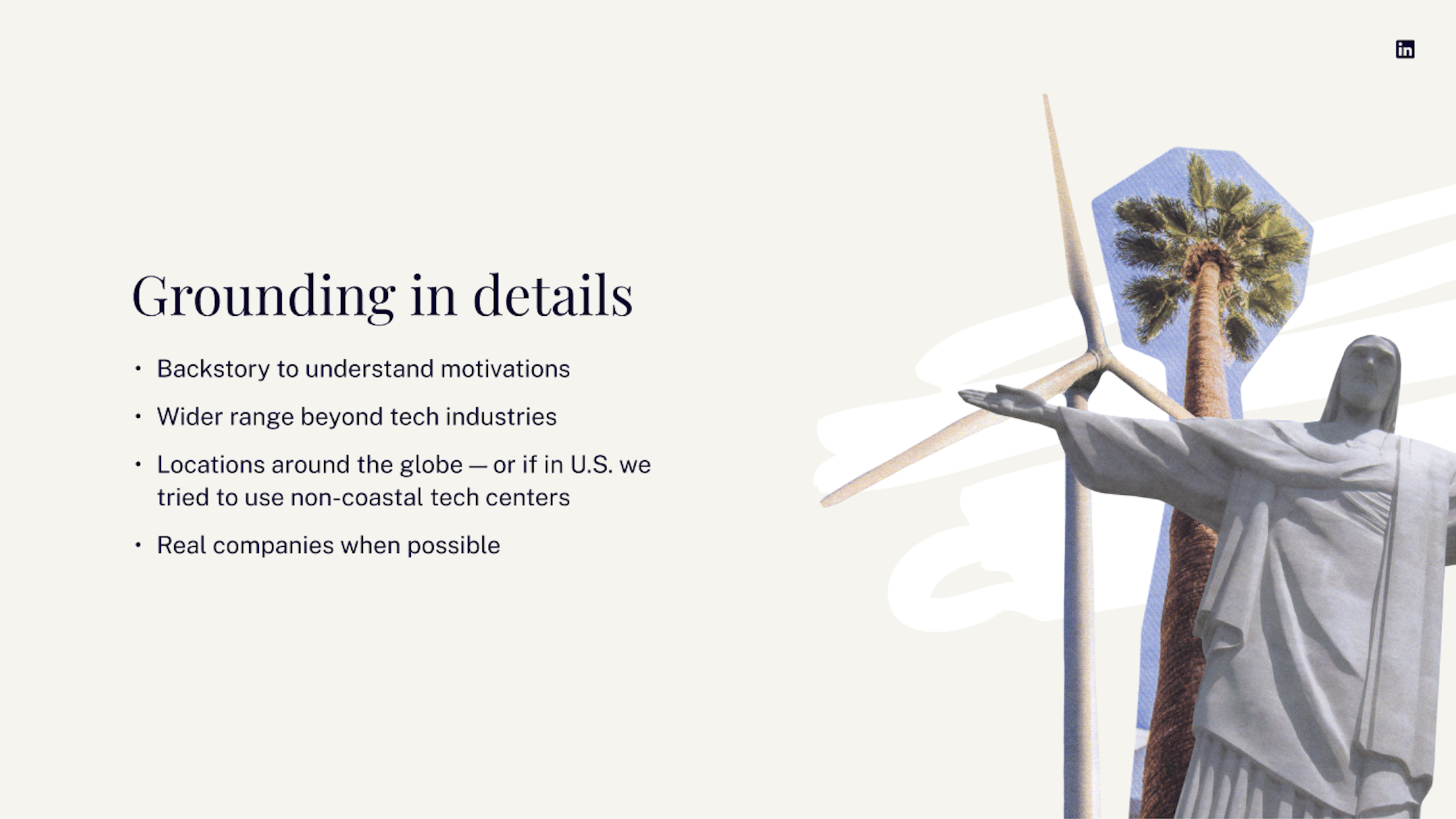
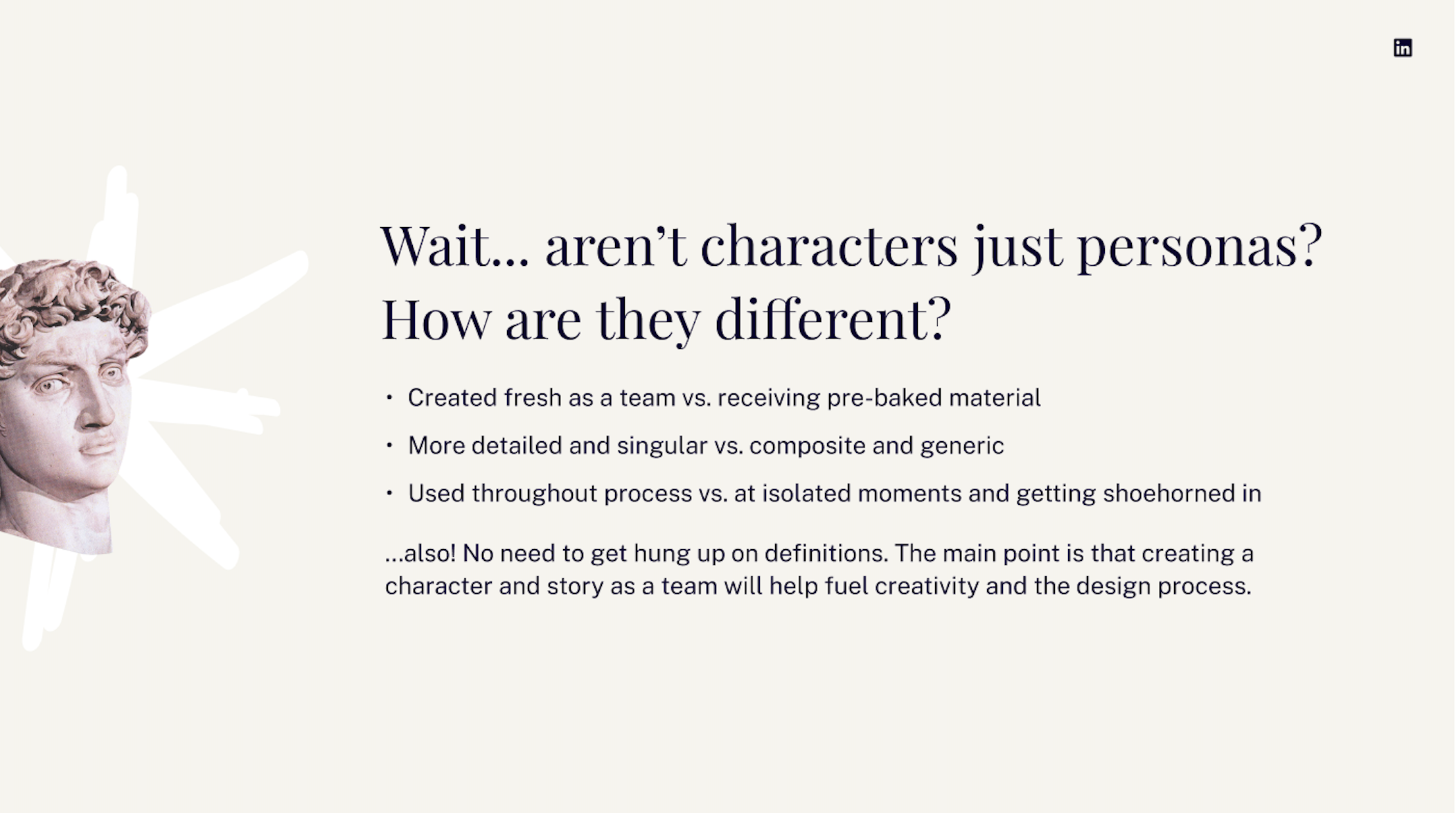
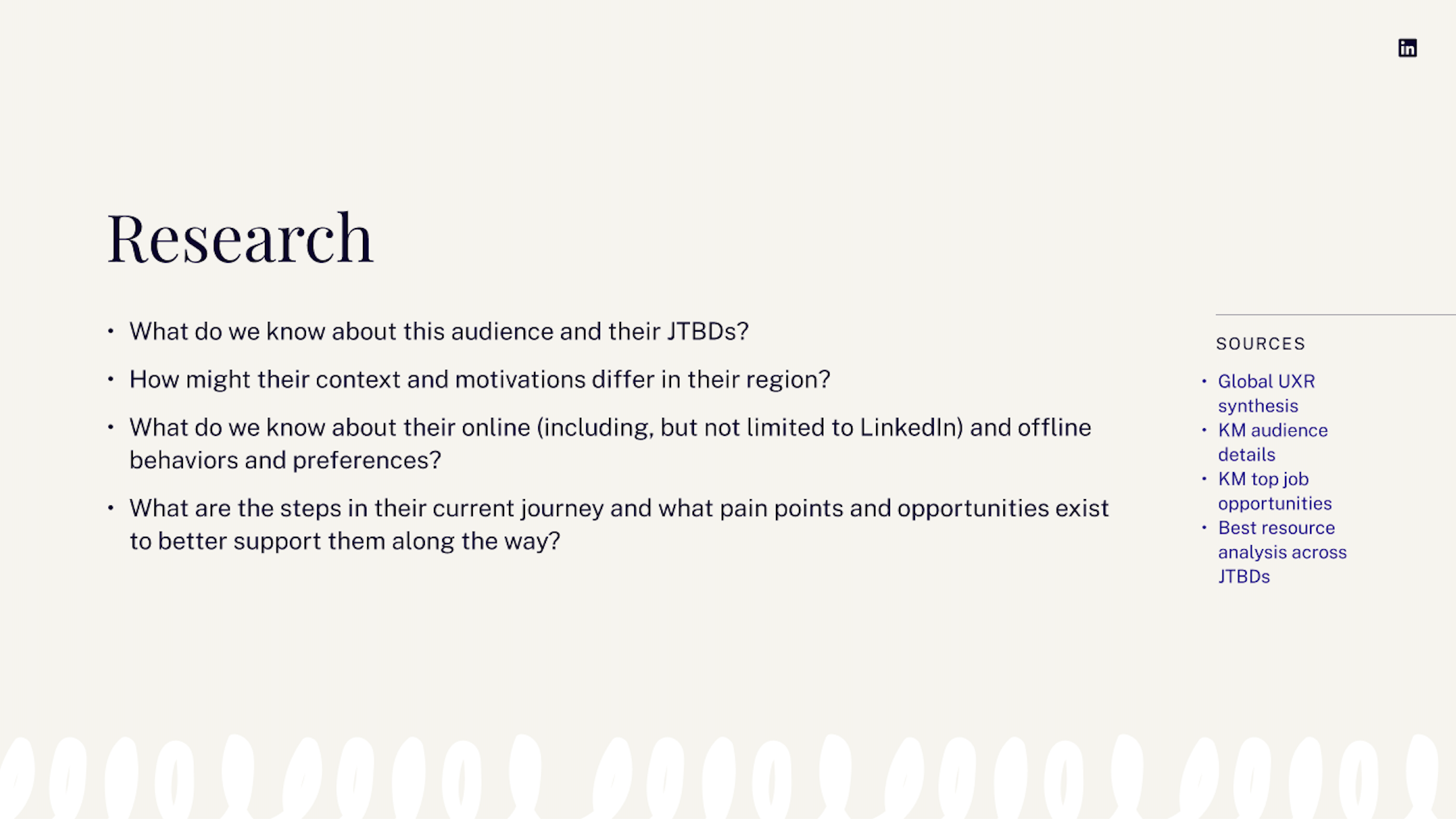
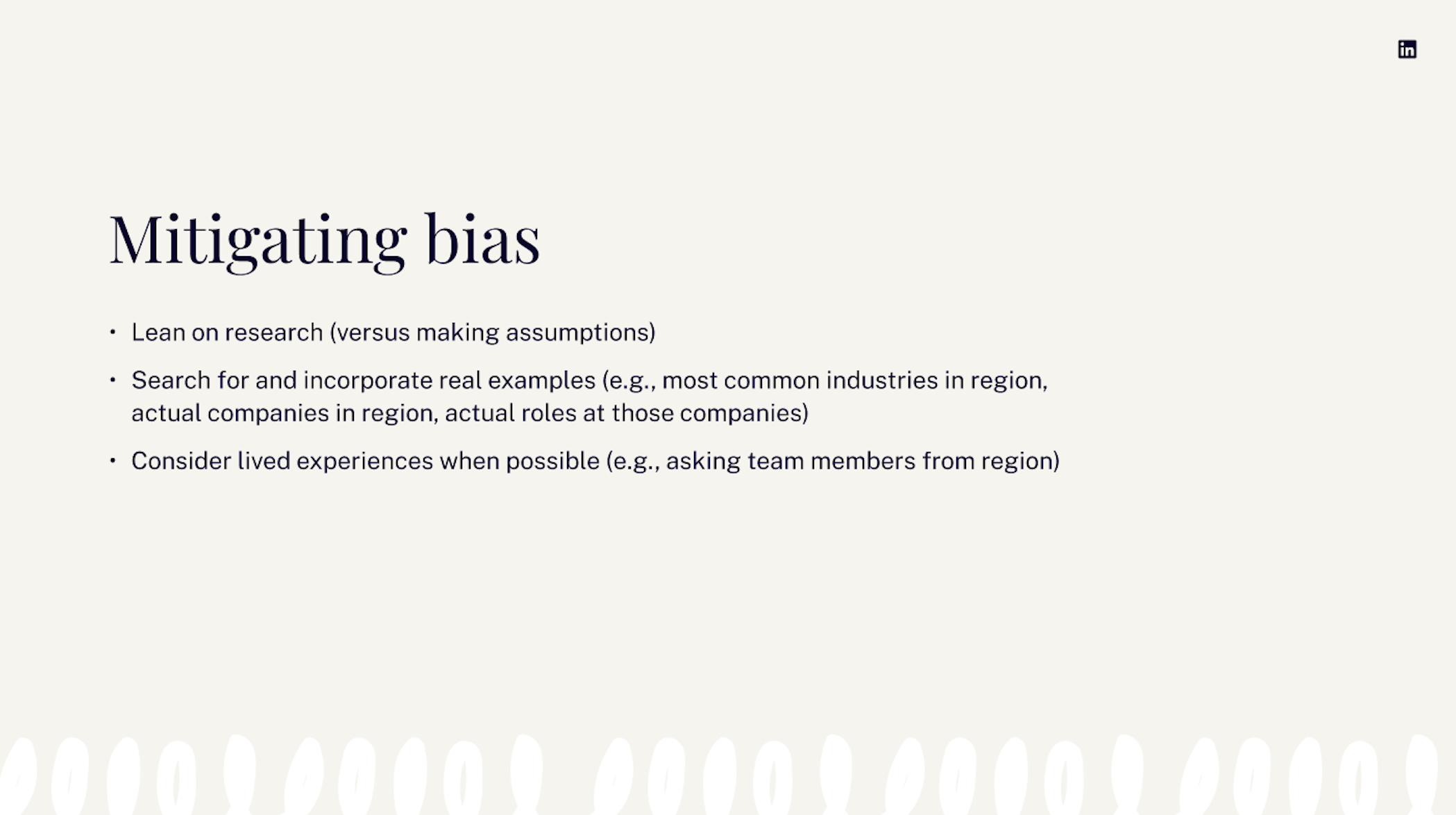
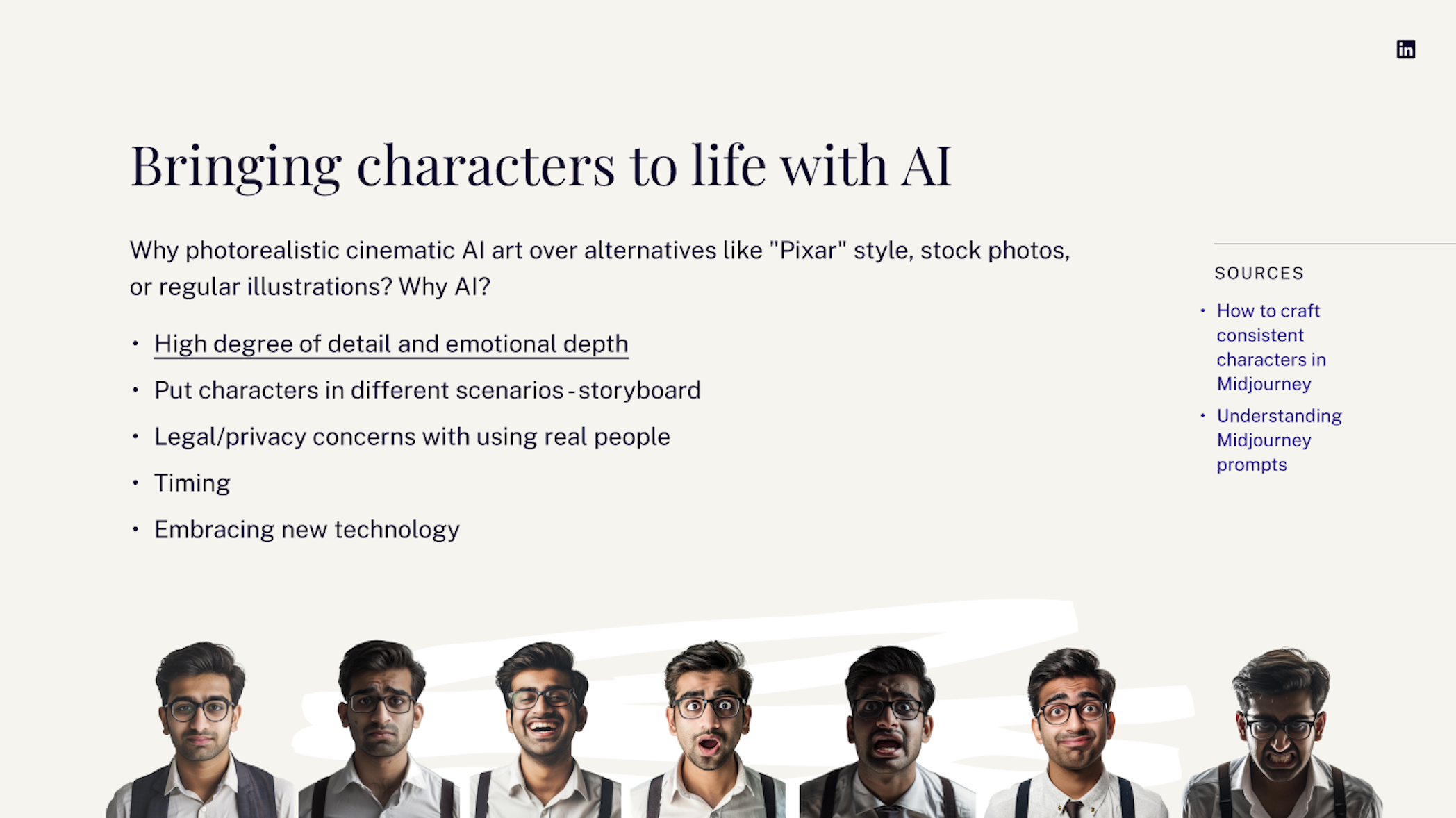
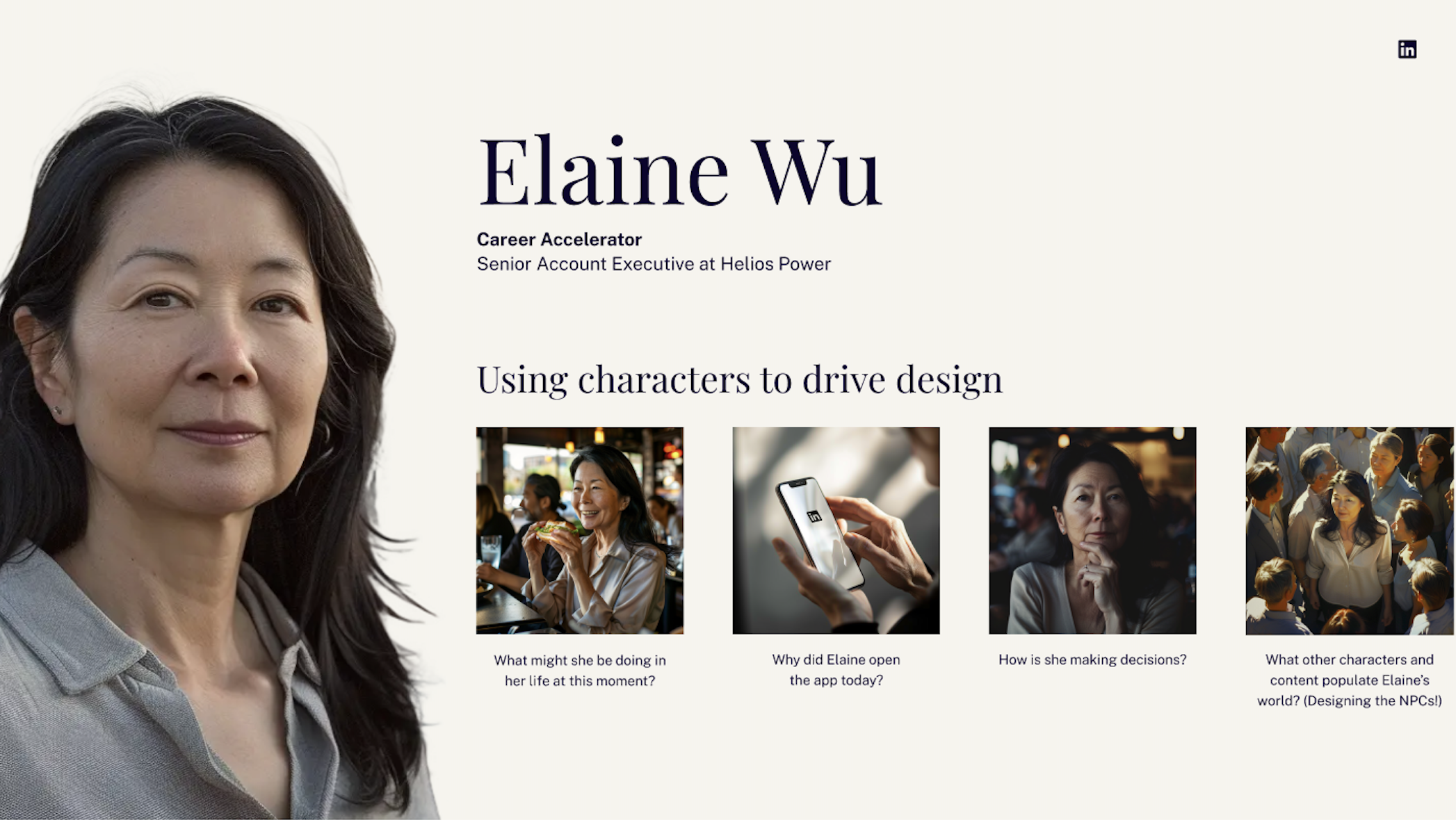
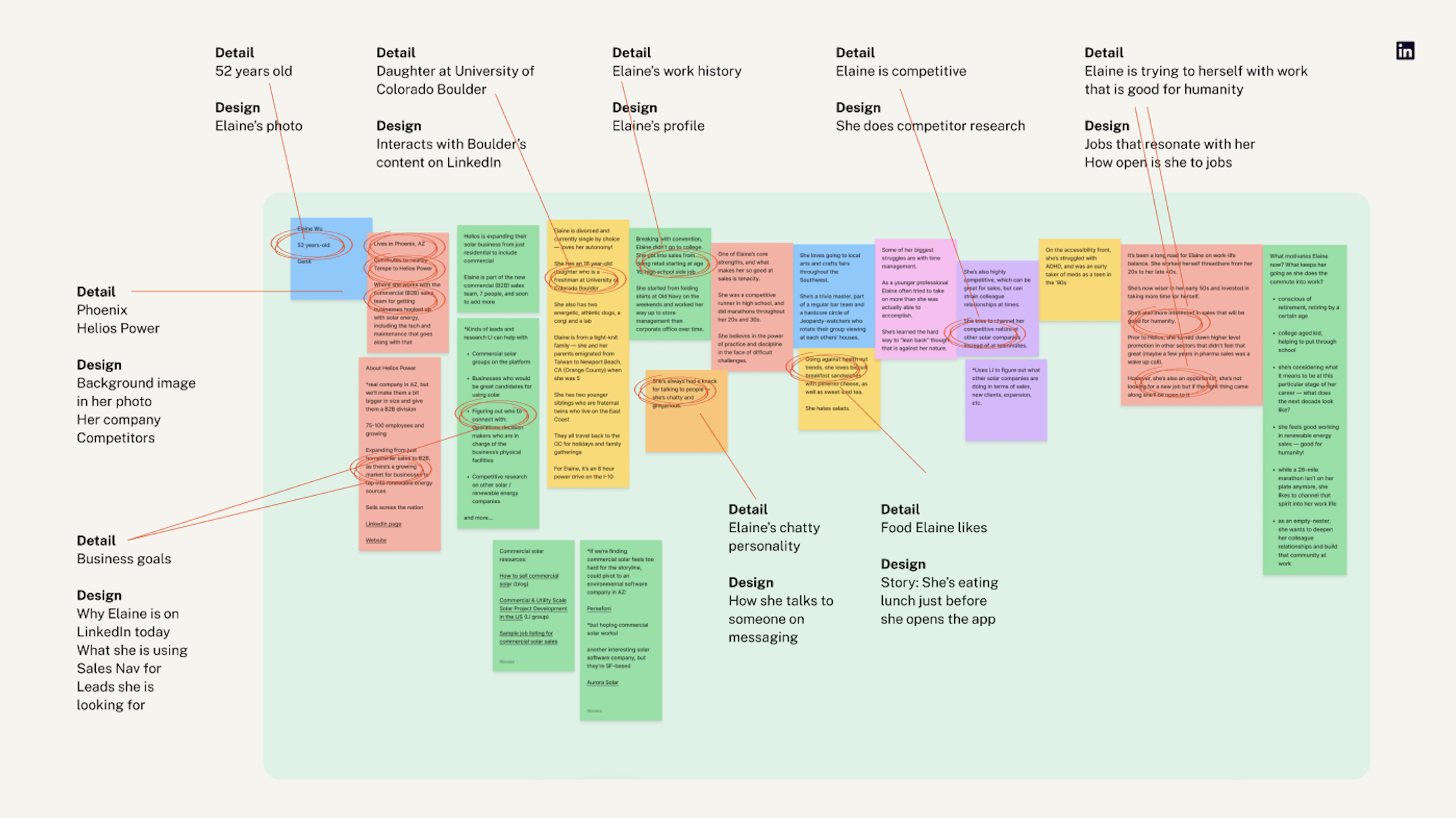
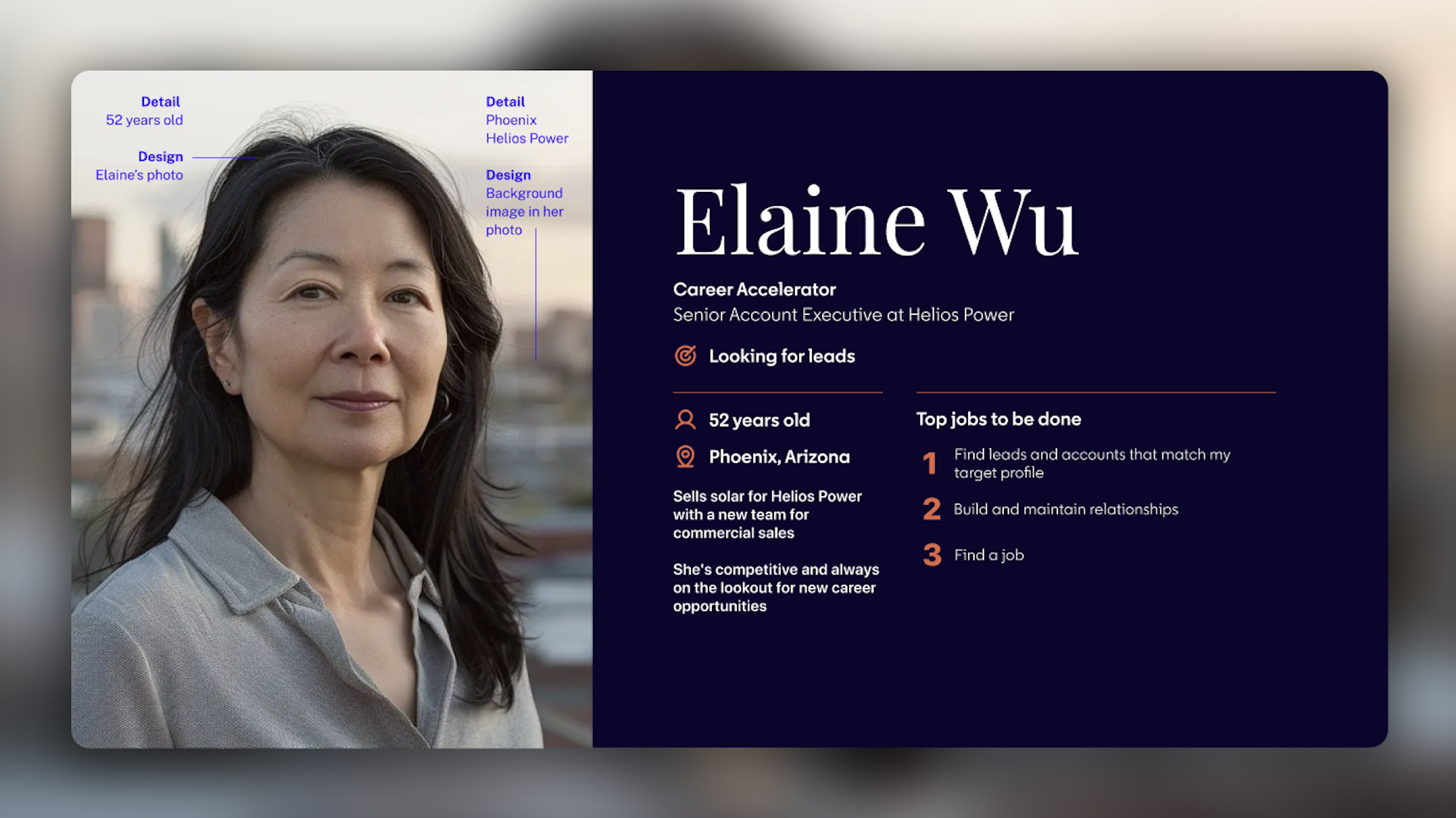
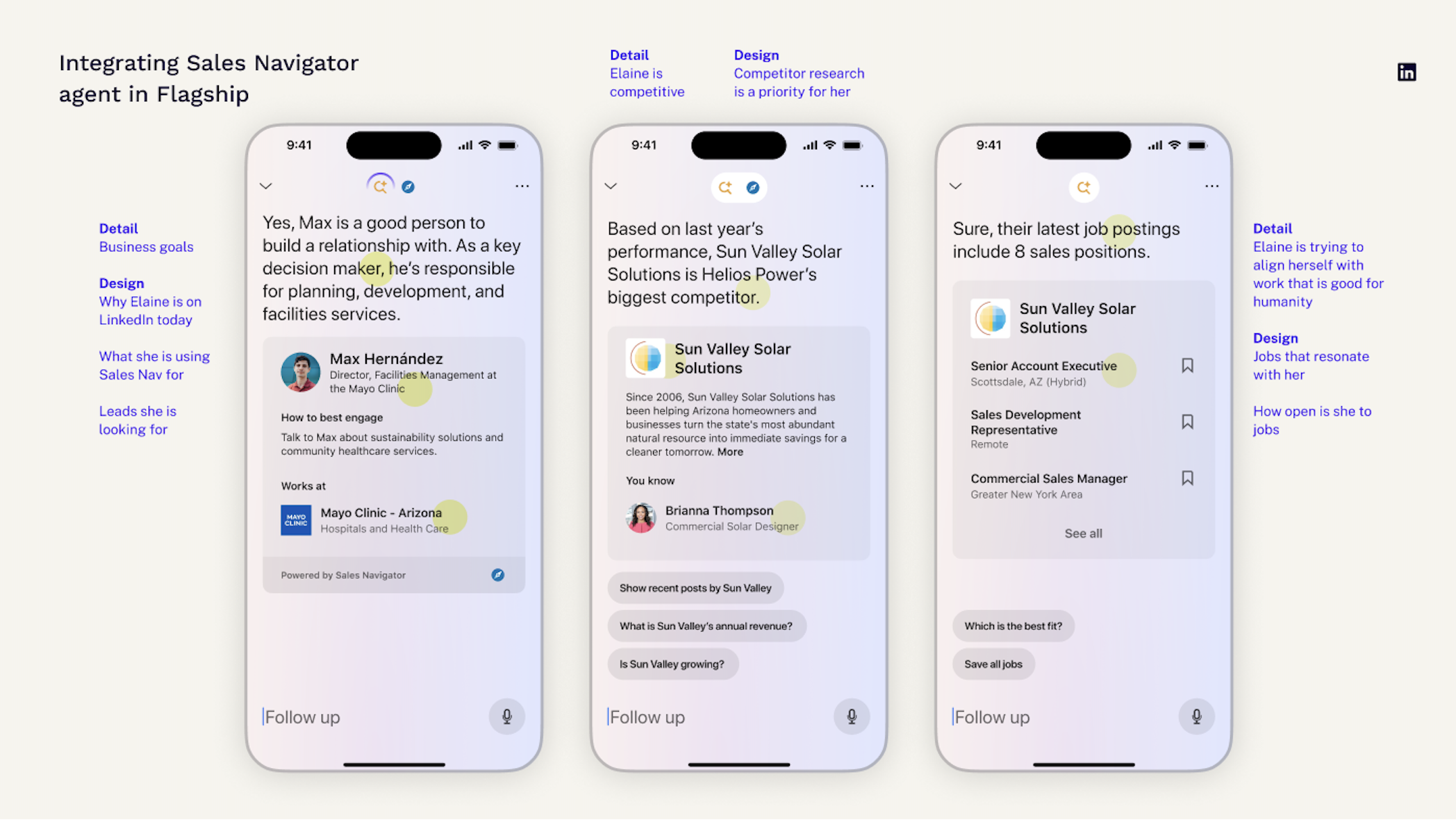
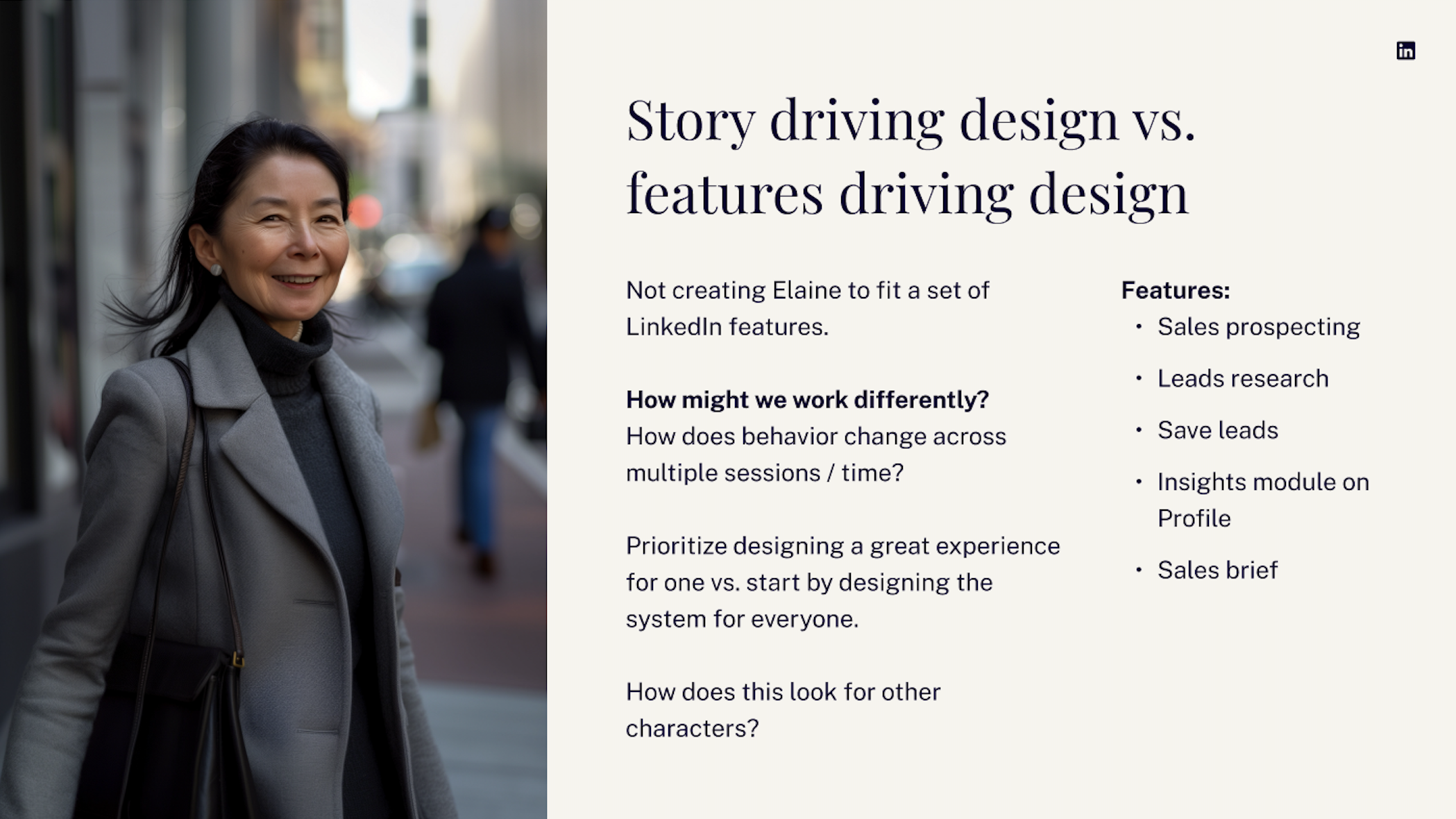
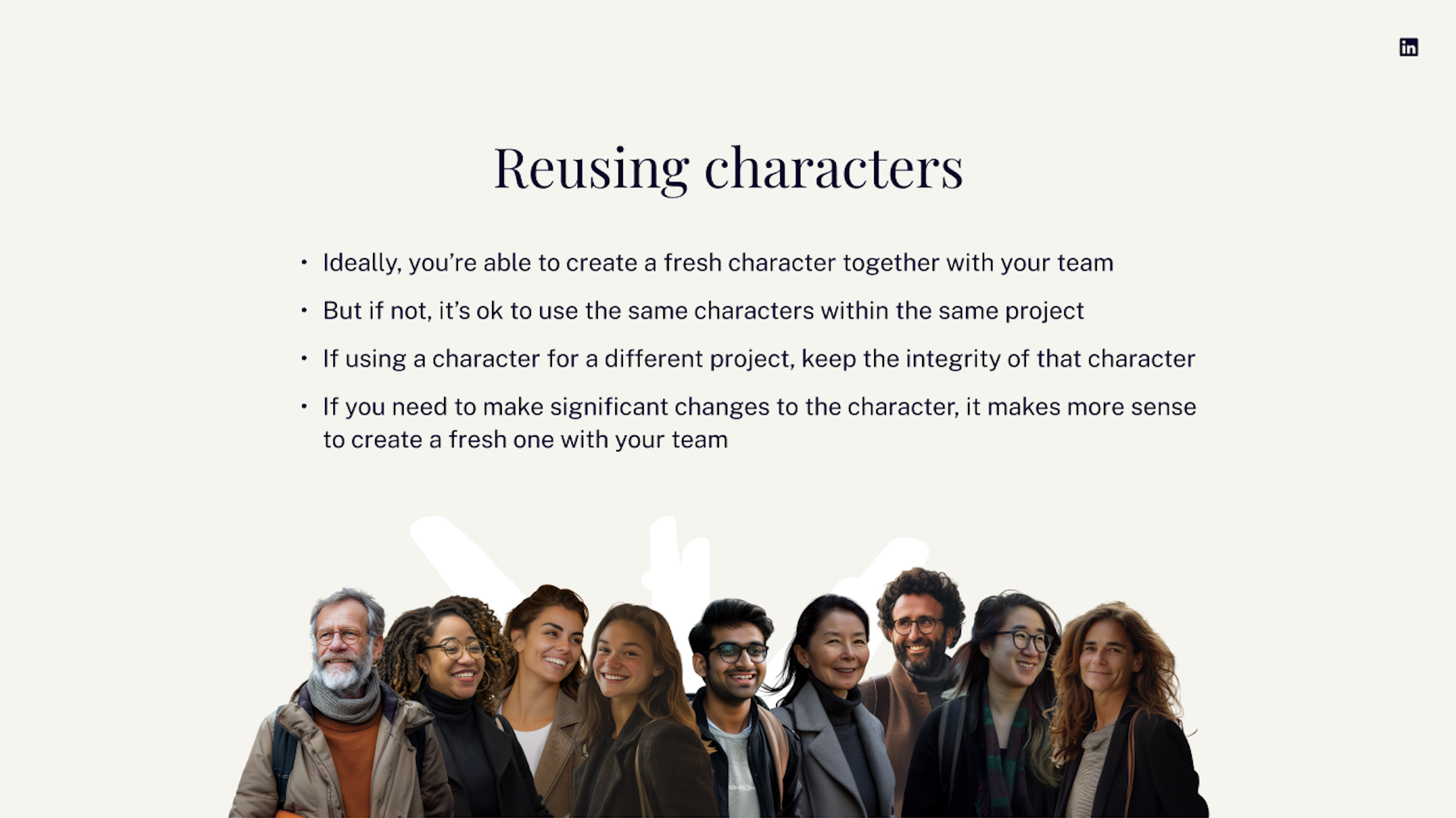
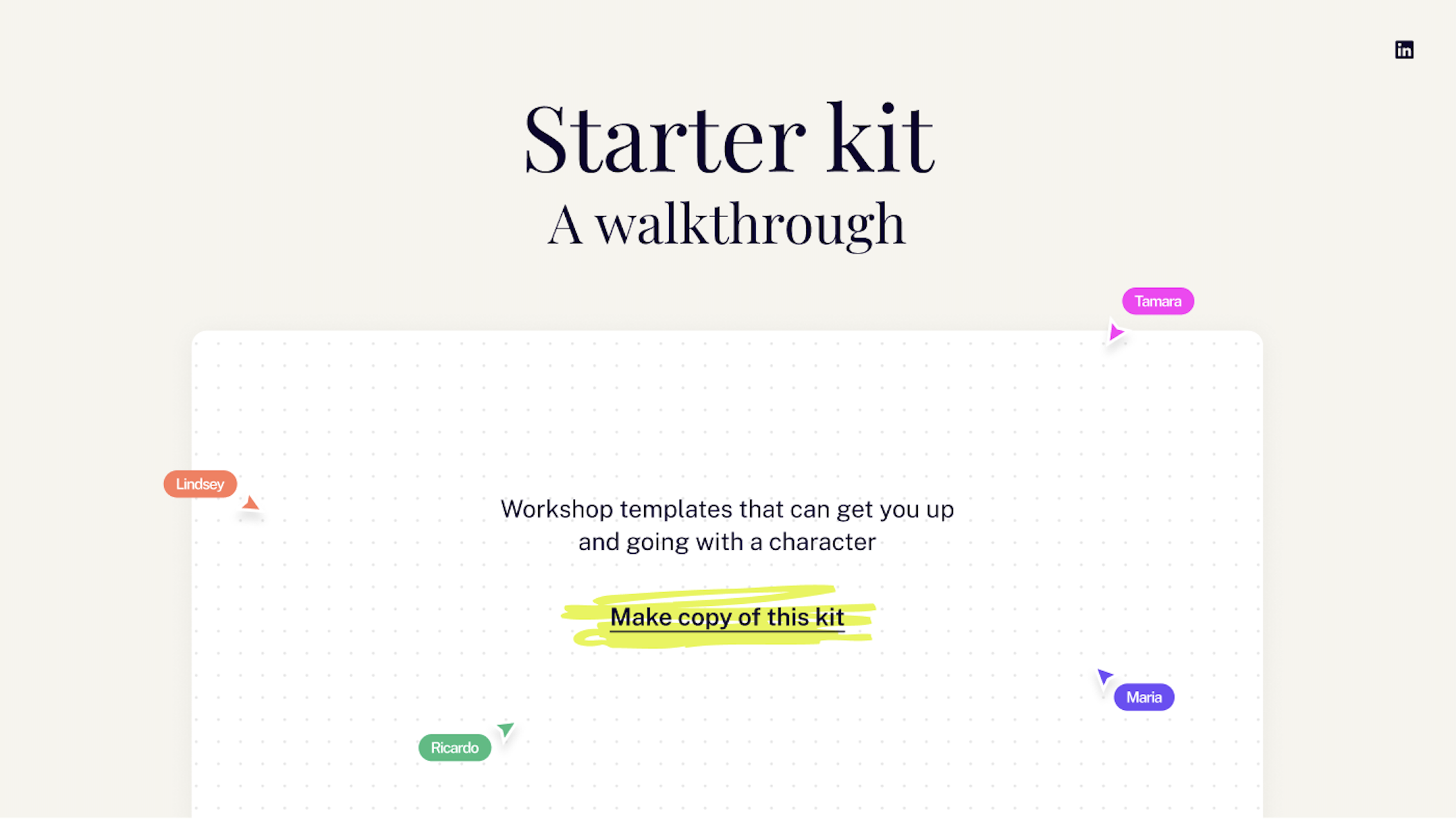
CHARACTERS ARE FOREVER: Teaser slices of the reusable workshop kit…
I say vibe, you say coding
Now that we’re nearing the close of the Work Samples page (happy to share more, just drop me a line), I wanted to include a personal vibe coding project, as one does these days.
A writing teacher from many moons ago introduced me to the “Five Senses” practice, where you write a lil’ something every day for each sense: see, smell, taste, touch, hear. I’ve used it over the years as a simple meditation of sorts to tune into my environment. It also comes in handy with more “serious writing” when you realize what a passage really needs is sense textures to ground the reader in the moment.
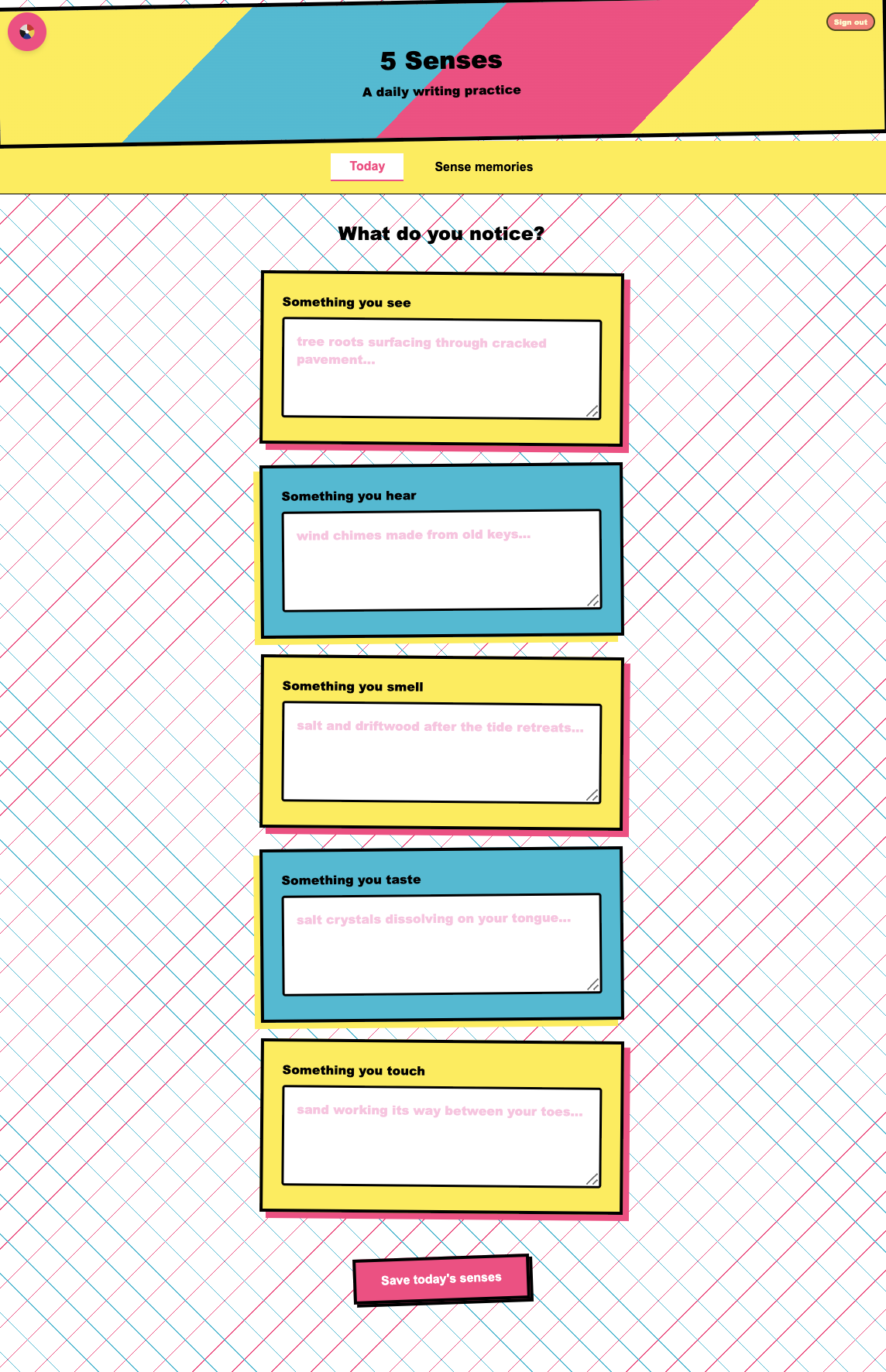
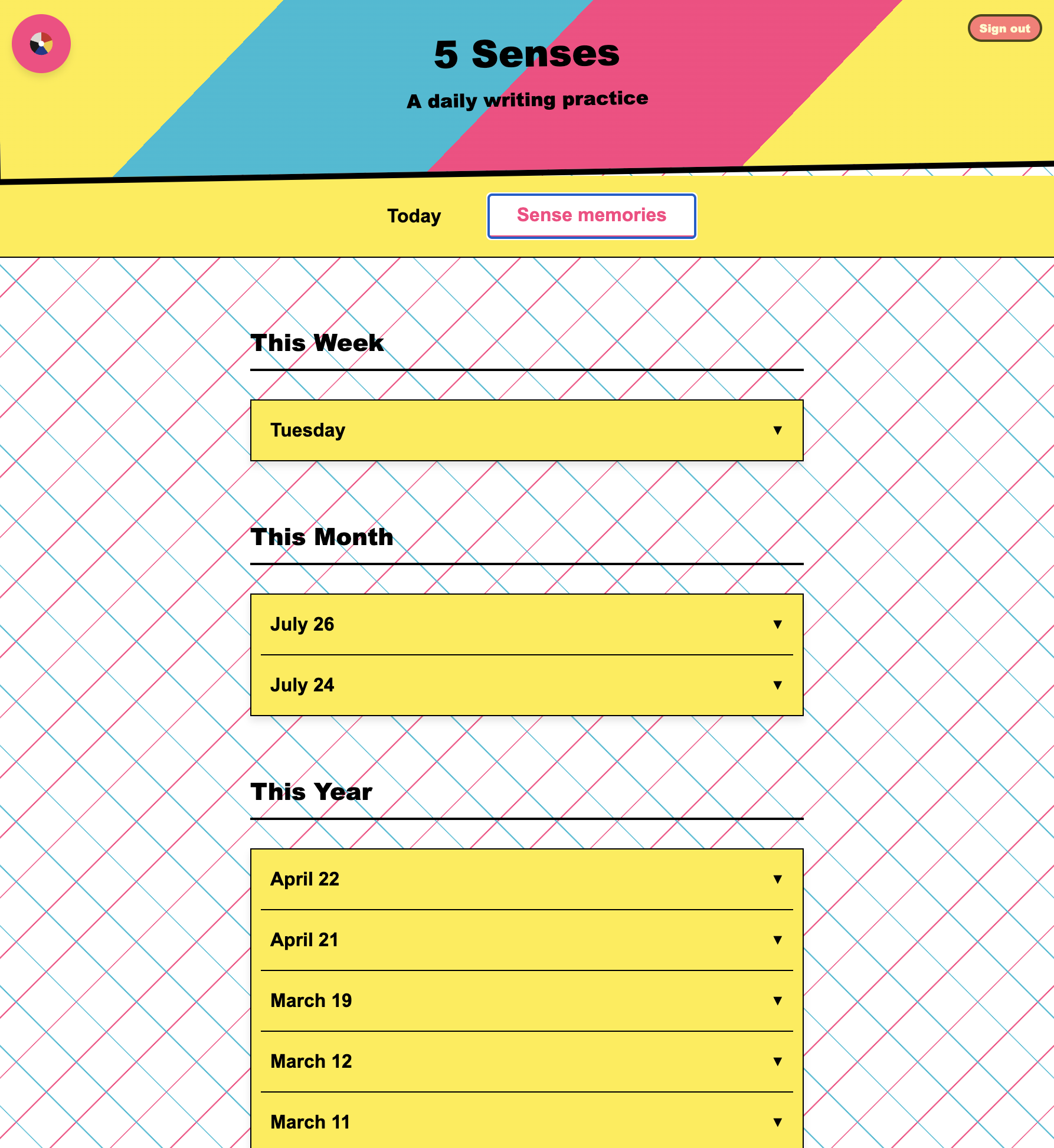
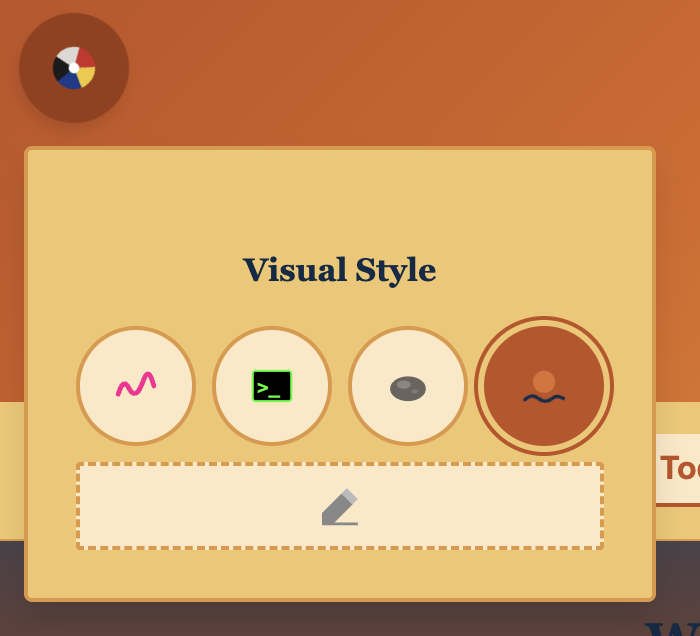
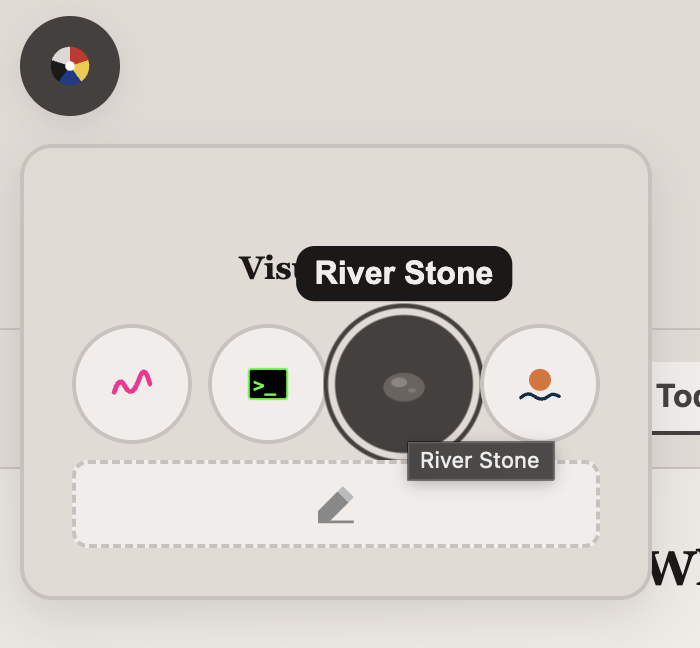
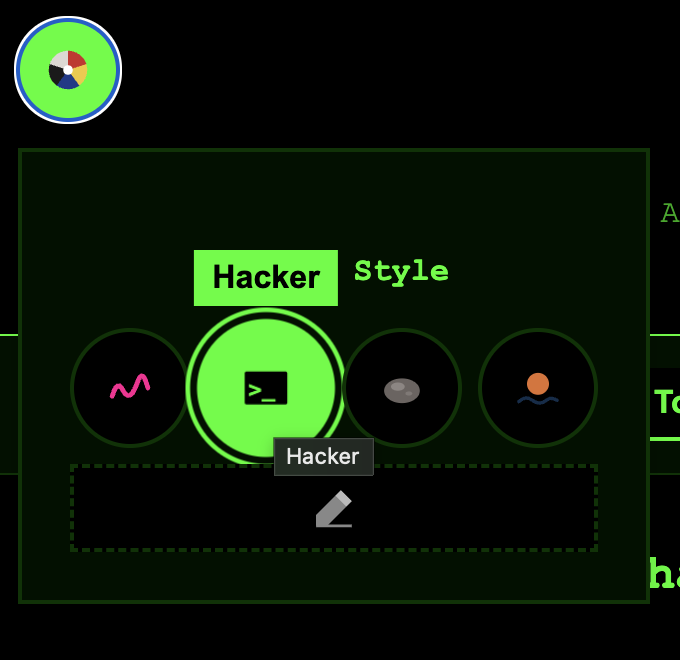
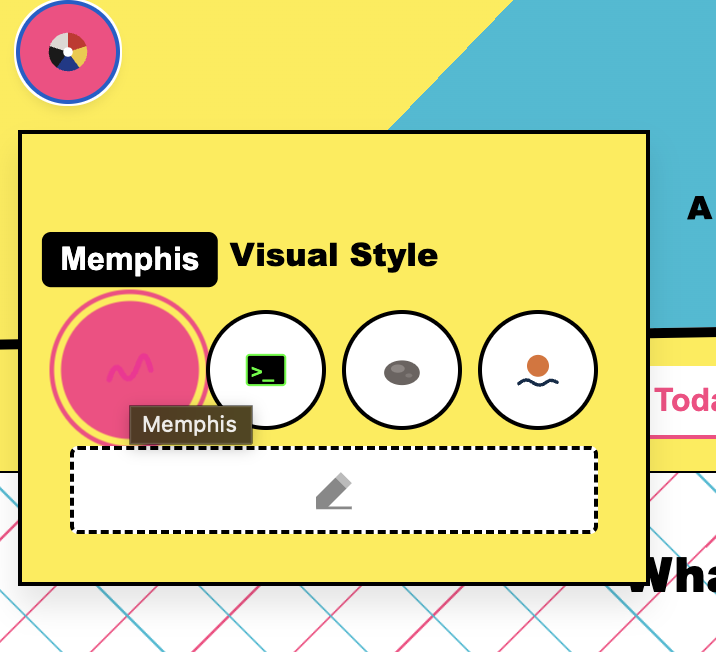
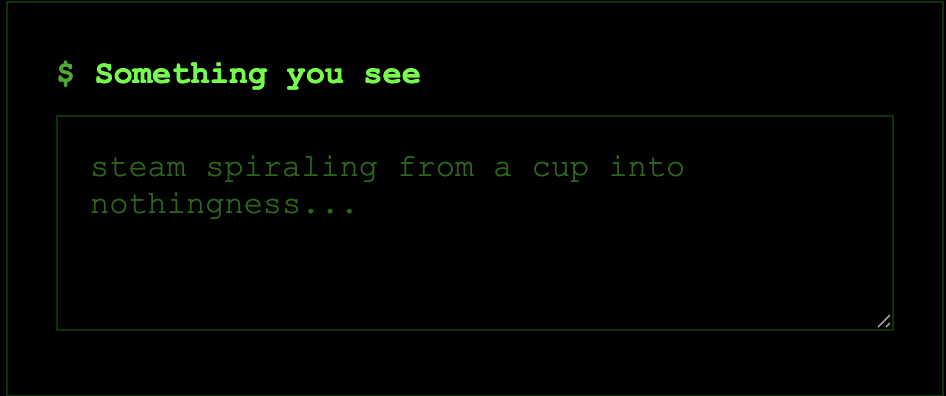
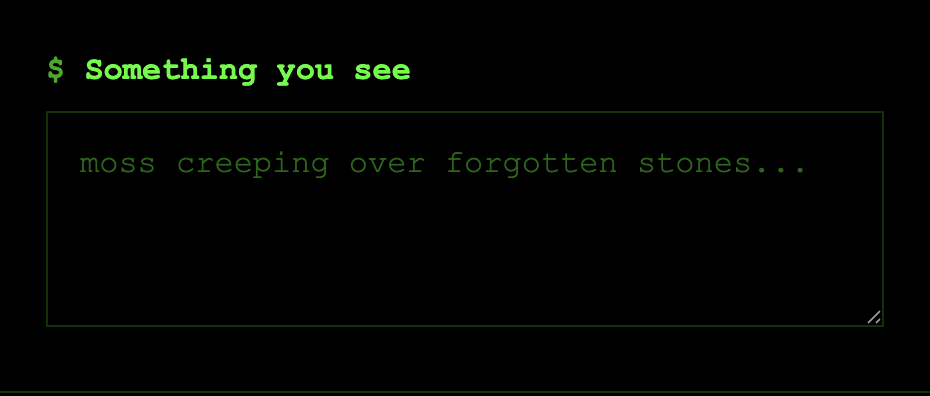
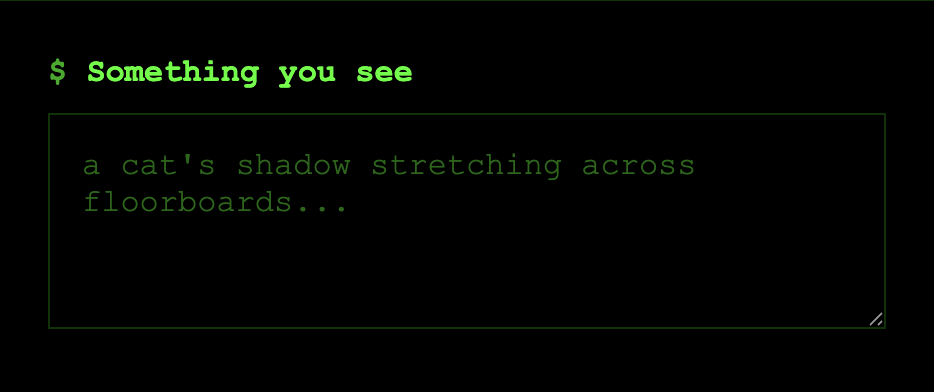
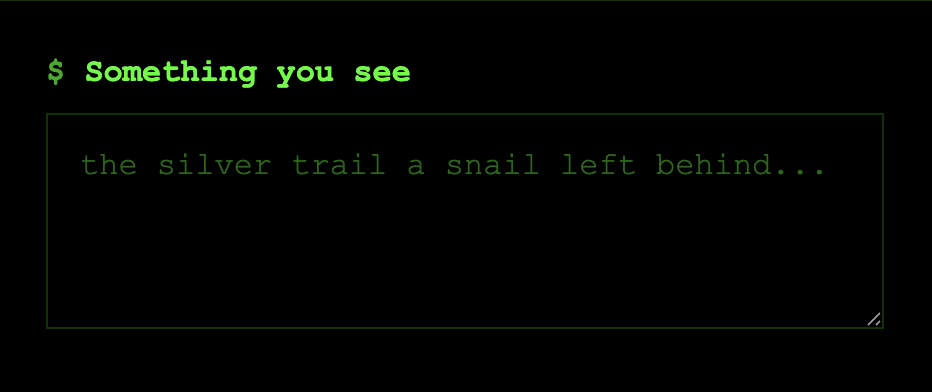
Something I find especially curious about these new technologies is how we are each enabled now to create our most idiosyncratic digital something-somethings. Working with Claude Code, I drummed up “5 Senses,” a web app for this exact writing practice, including a “Sense memories” library, fresh ghost text each session, and a simple widget that lets me switch up the design theme.
It’s an ongoing process that’s helped me learn-through-working with coding agents, Terminal, GitHub, Supabase, VS Code, and, of course, the various LLMs. What we’ll all be capable of in a year or five years from now, it’s mind-boggling to contemplate.
AI is evolving so rapidly, and there are so many open questions behind the outputs. What will be the best environmental, social, financial ways to build out the massive infrastructure this technology necessitates? Can we widen the aperture of how these tools are built so there’s a variety of thought and experience that gets infused into the underlying frameworks? Right now everything is very language-centric, but that is only a slice of intelligence, of communication, of workflows, of collaboration, of how different minds create. How do we develop AI so we’re not just heavily burning through all our language circuits?
Even small projects can set off big questions! If you made it to the bottom of this page, that’s something we can chew on together!
AI PERSONAL PROJECT, 5 SENSES: sample screens. A childhood shoutout to Memphis design!
AI PERSONAL PROJECT, 5 SENSES: When your eyes get tired, you can always switch it up…
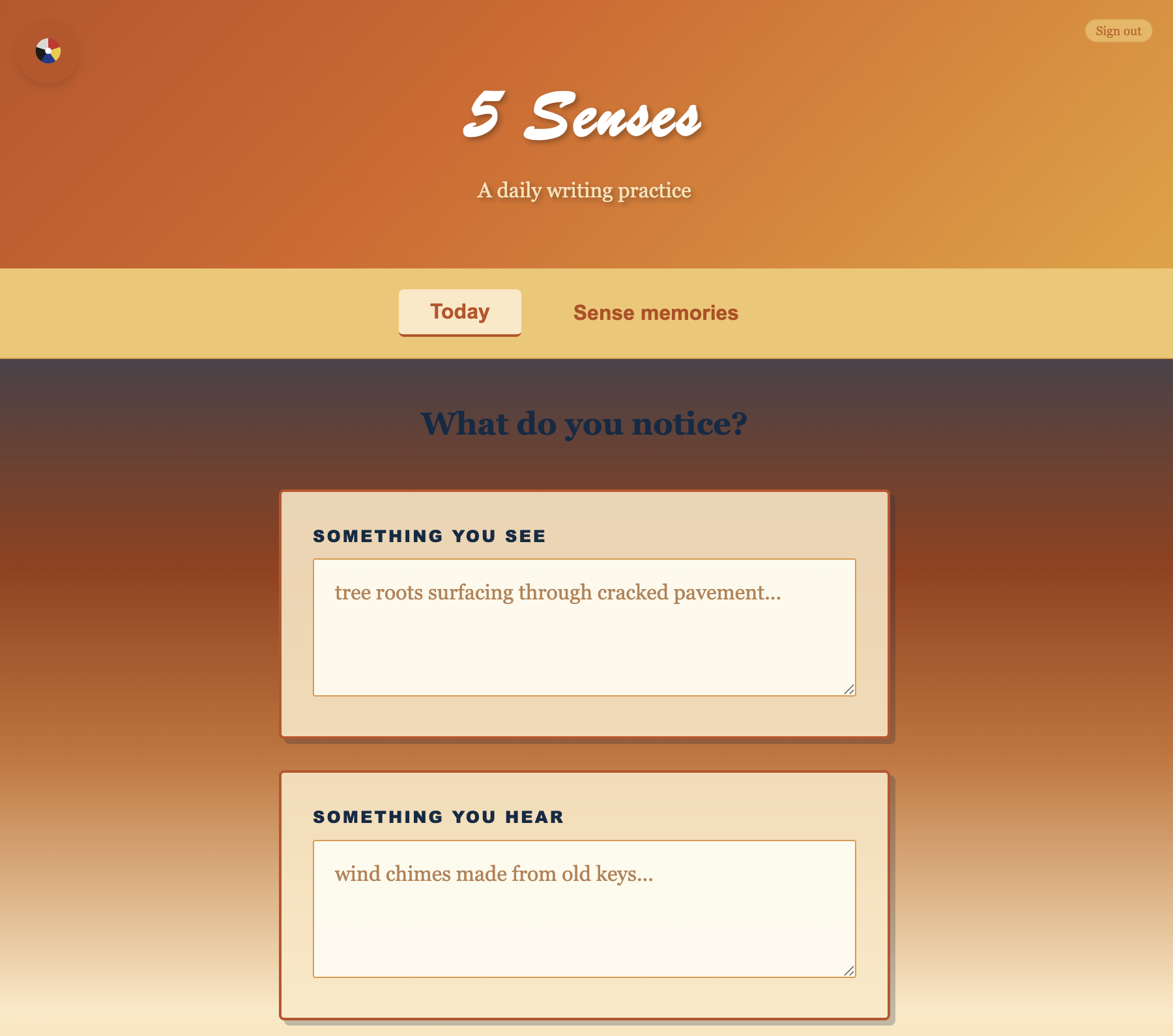
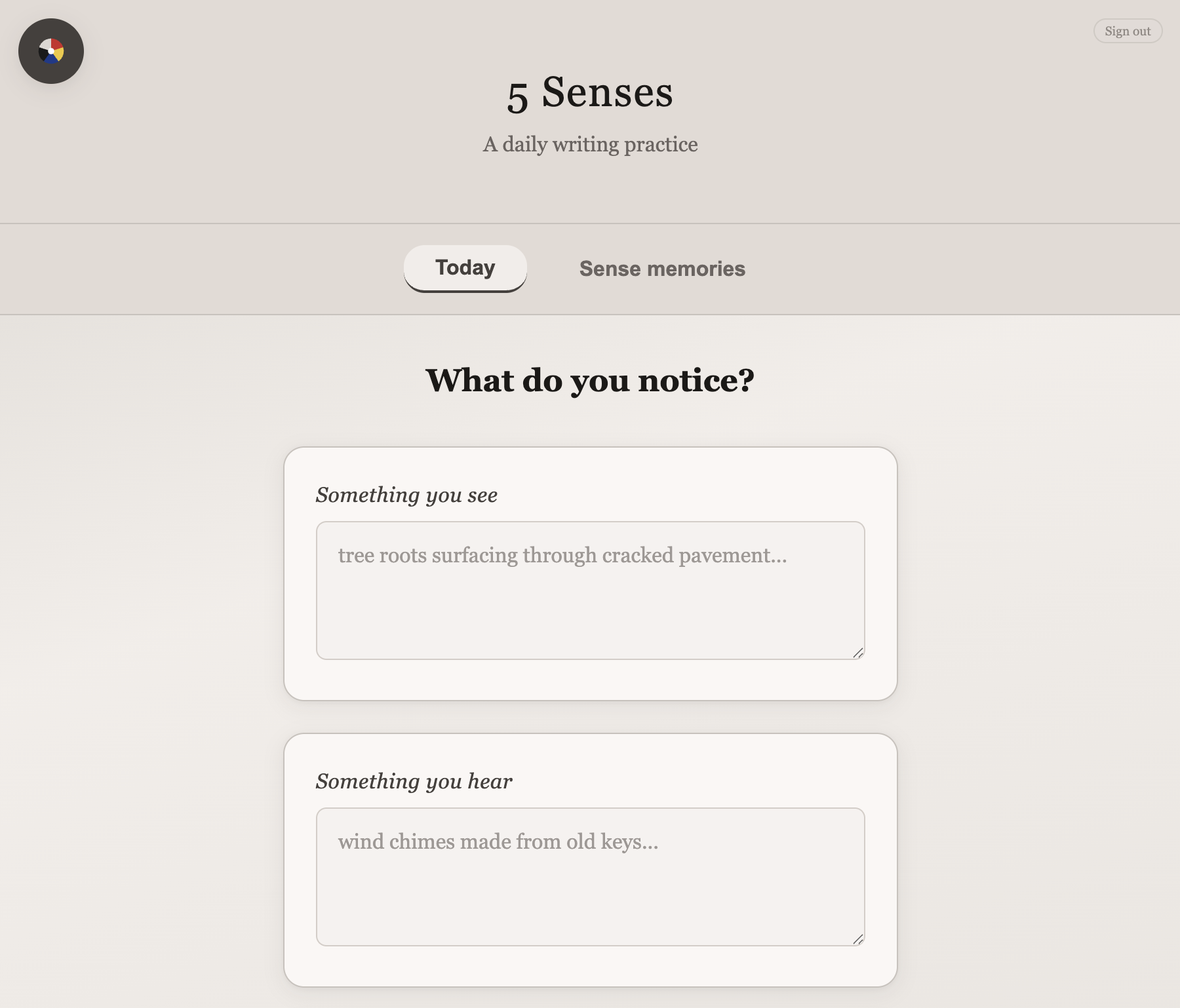
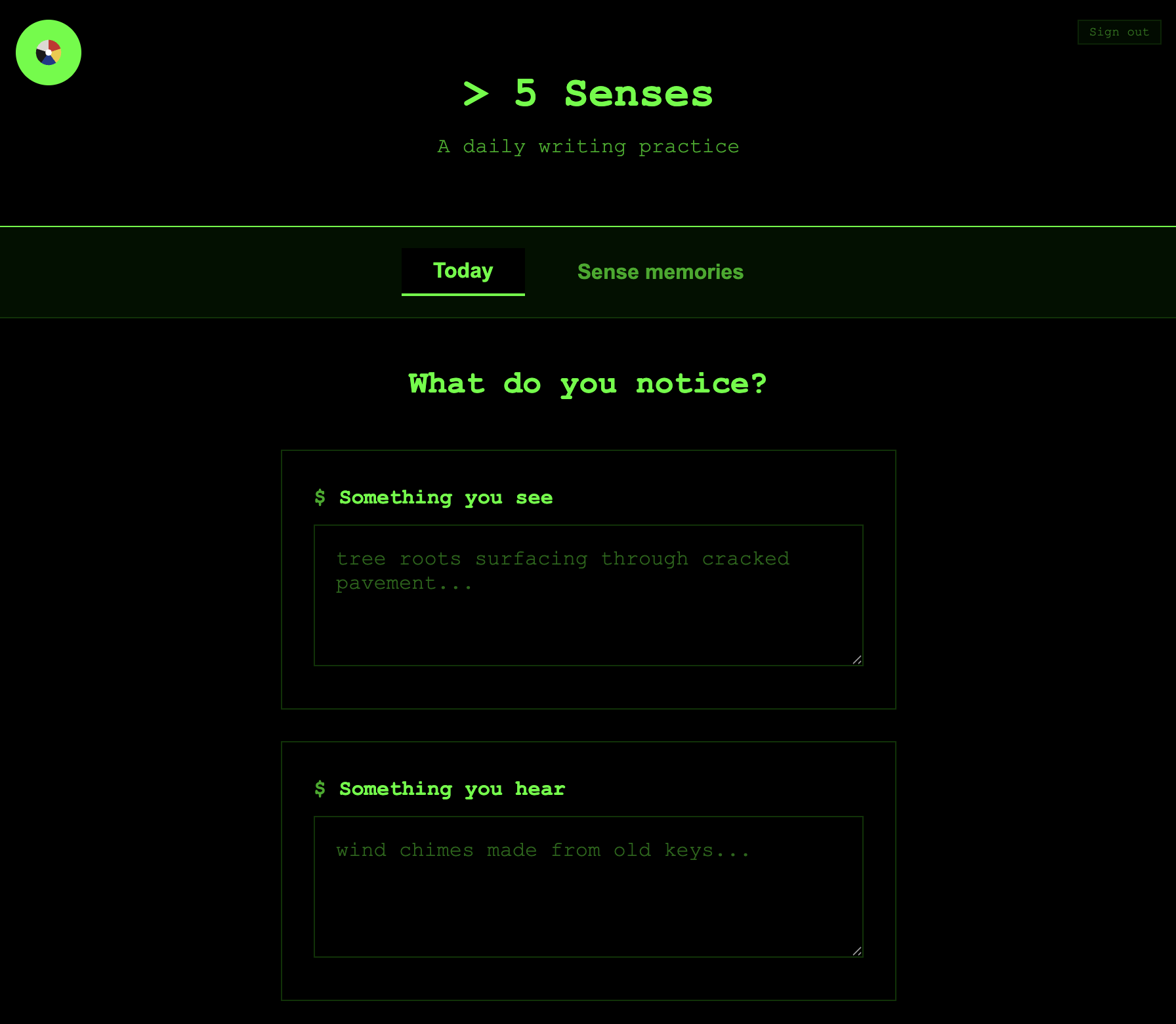
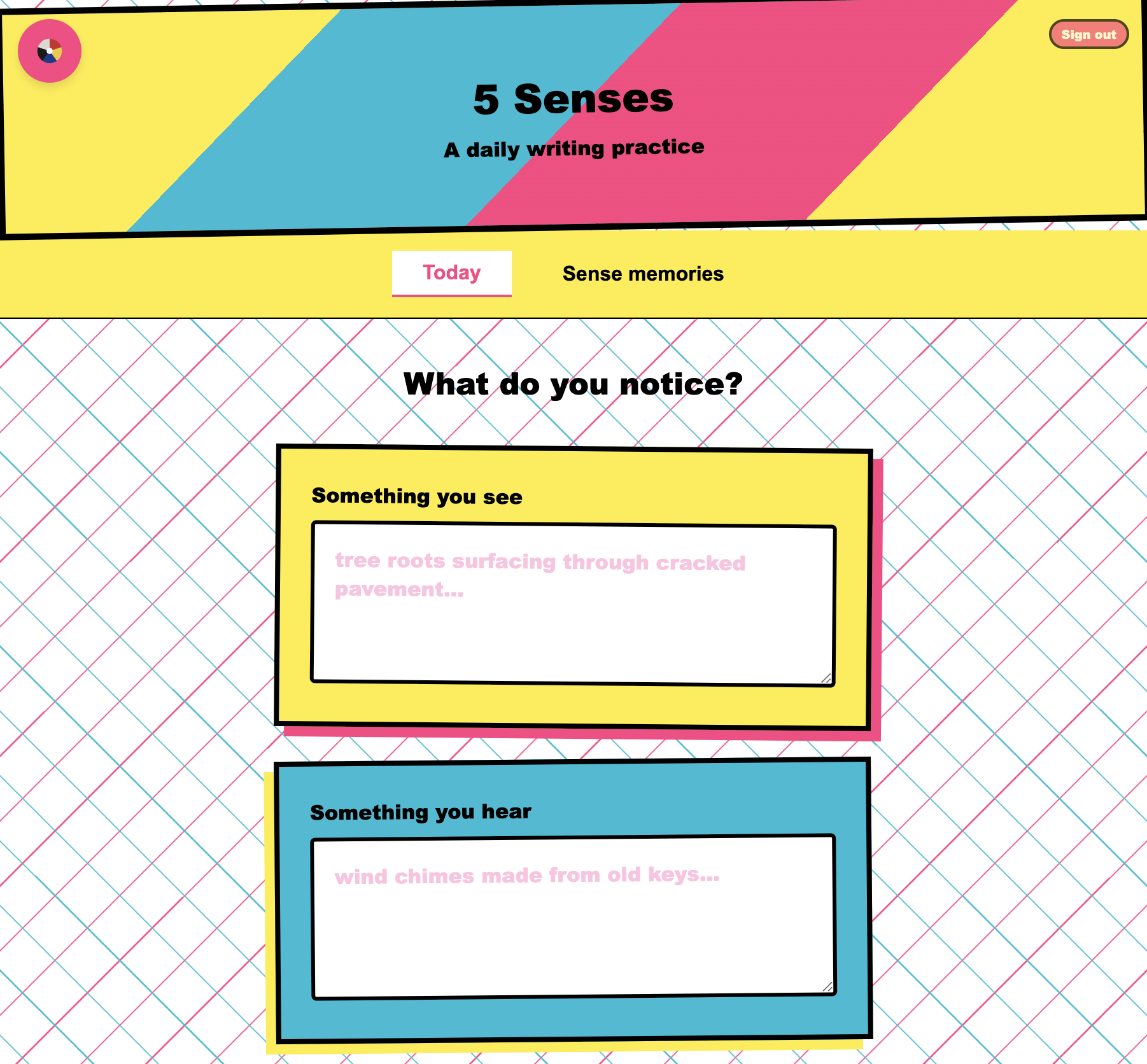
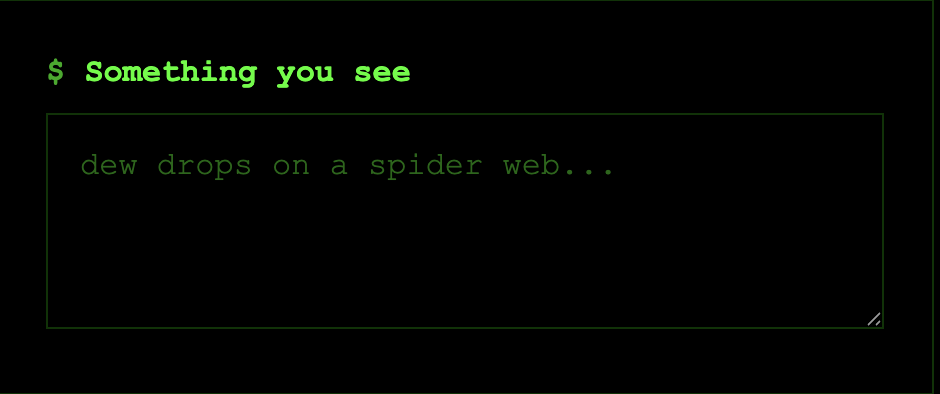
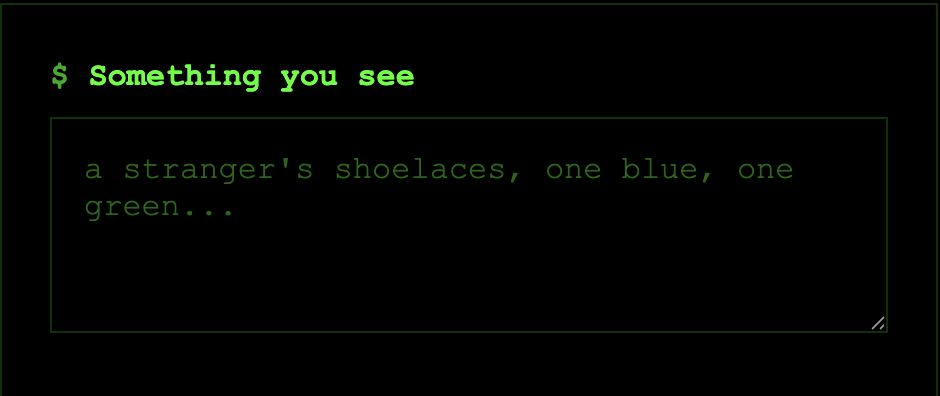
AI PERSONAL PROJECT, 5 SENSES: New ghost text inspo every day…
Thanks for scrolling the long scroll! Want to know more? Drop me a line: TLS@tamarals.com
You can also find me over on Substack @globaldadrock and LinkedIn